Best places to live in Greece 2027: moving from the UK
Greece is home to around 10.4 million people and is one of the sunniest countries in Europe. It is famous for its islands and beaches, excellent food, mythology and ancient architecture, and with more than 200 inhabited islands you will be spoilt for choice. If you are moving to Greece from the UK in 2027, this guide covers the best places to live in Greece and answers the question many British movers ask first: can I move to Greece from the UK after Brexit?
Can I move to Greece from the UK?
Yes. UK nationals can still move to Greece, but since 1 January 2021 you need the right visa and residence permit to stay longer than 90 days in any 180. According to GOV.UK's Living in Greece guide, you usually apply for a national (Type D) visa before you travel, then apply for a temporary residence permit once you arrive. Visas are available for work, digital nomads, study, joining family and retirement.
You cannot apply for residence until you are in Greece. After five years on a temporary permit, you may be able to apply for permanent residence.
Moving to Greece from the UK: step by step
1. Choose the right visa
The main routes for British movers include:
- Employment, with a job offer from a Greek employer
- Digital nomad, if you work remotely for an employer or clients outside Greece
- Financially independent person, often used by retirees with a regular income from pensions or savings
- Family reunification, if you are joining a family member who lives in Greece
- Investment (Golden Visa), linked to property or other qualifying investment
Each route has its own income or investment requirements, which change from time to time. Check the latest criteria with the Greek Embassy in London or the Ministry of Migration and Asylum before you apply.
2. Register when you arrive
Within 90 days of arriving, register your address in person with your regional Hellenic Police branch and apply for your temporary residence permit. You also need a tax identification number (AFM) for tax returns and property purchases, and a social insurance number (AMKA) to access many services and benefits.
3. Sort out healthcare, tax and driving
Public healthcare is provided by EOPYY, and you need a Greek residence permit to access it while living in Greece. The UK has a double taxation agreement with Greece. You can drive on your UK licence for up to six months, then you should exchange it for a Greek licence.
4. Plan how to move your belongings
Moves from the UK to Greece usually travel by road for the mainland, with ferry crossings for the islands, or by sea freight for larger shipments. Smaller moves can share container or vehicle space (groupage). Island deliveries can take longer and may need smaller vehicles for narrow streets, so plan your timings carefully. Costs depend on the volume you are moving, the destination and the services you choose.
Our international removals team can handle packing, shipping and delivery to your new home. If you want to keep some belongings in the UK, self storage starts from £18. Choose a secure facility to keep your belongings safe at all times. Bringing a pet? Our pet shipping service can help.
Best places to live in Greece
Athens

When people think of Greece, they often think of its history, which spans thousands of years, and much of it can be found in Athens. The city is home to many ancient monuments and ruins, including two UNESCO World Heritage Sites: the Acropolis of Athens and the Monastery of Daphni.
Athens is also a lively modern capital, with excellent restaurants, cafes and bars and a popular nightlife scene. Parks and green spaces give locals somewhere to relax and watch the sun set over the city.
Transport links are good. The metro is reliable and connects to Piraeus, the main port, so the islands are only a ferry ride away.
Santorini
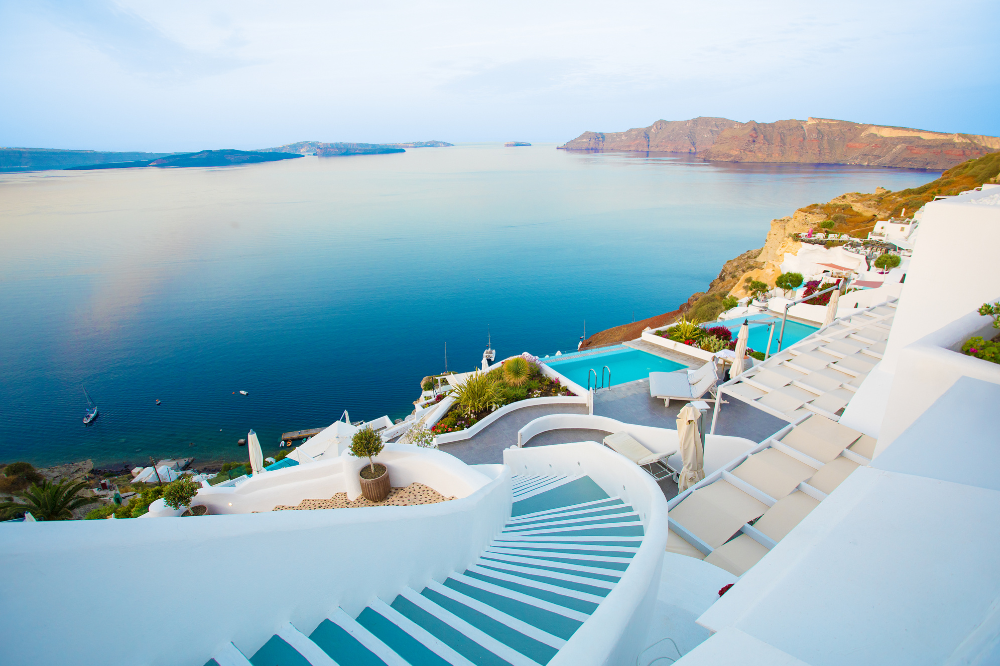
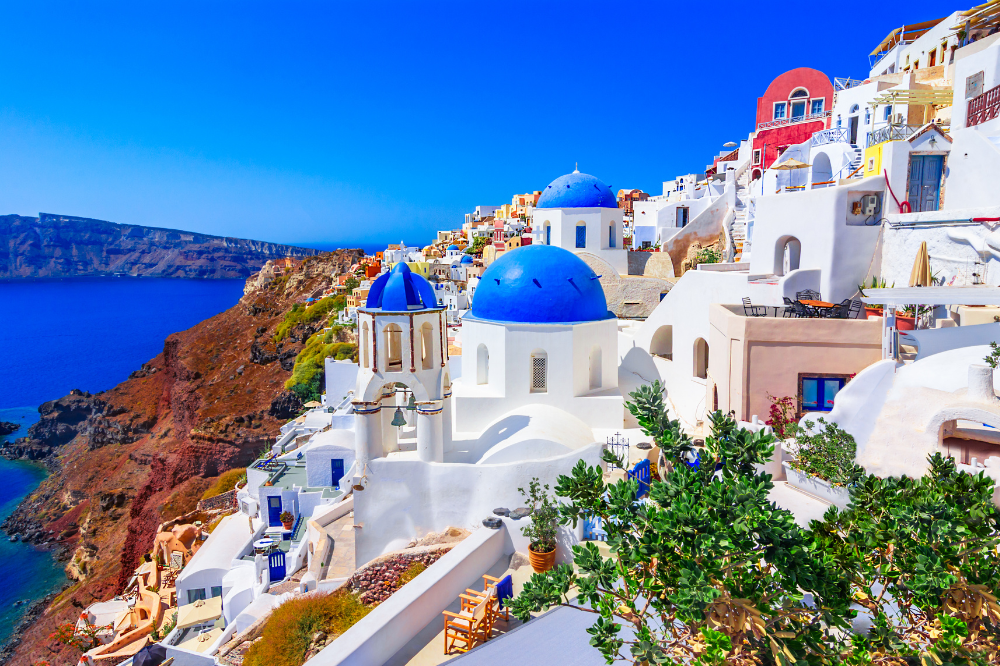
Famous for its blue domed white buildings, Santorini is one of Greece's best known islands. Beyond the busiest spots, you will find traditional villages, vineyards and local tavernas in the island's back streets.
Santorini's volcanic origins give it unusual beaches in red, black and white, with clear water and views over the Aegean Sea. Many beaches offer water sports, and the coast is lined with tavernas.
The island is known for its Mediterranean cuisine, from fine dining to traditional family run restaurants. Volcano hikes and sailing trips are popular too. Bear in mind that property is expensive and the island is very busy in summer.
Rhodes
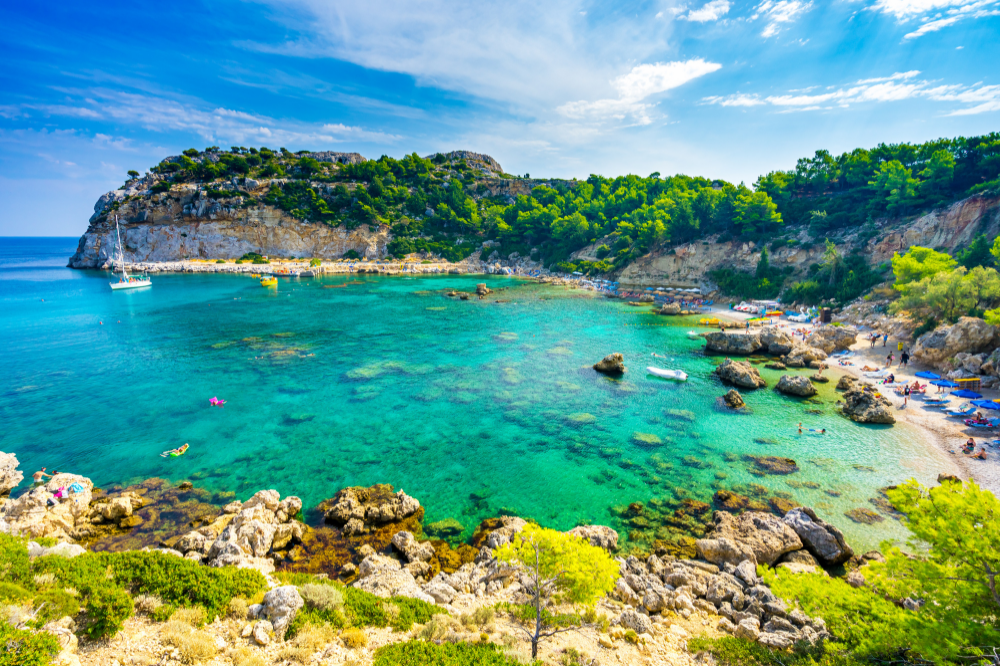
Rhodes is the fourth largest Greek island and has one of the longest summers in Greece. Its beaches suit water sports such as windsurfing and kitesurfing.
If you want a traditional Greek lifestyle, Rhodes has charming back streets full of tavernas, bars and cafes. You will not be isolated from healthcare or work, and Rhodes Town has most of the facilities you need.
The island is rich in history, including the Acropolis of Lindos and the Temple of Athena Lindia. The medieval Old Town of Rhodes, with its cobbled streets, mosques and Ottoman era buildings, is a UNESCO World Heritage Site.
Thessaloniki
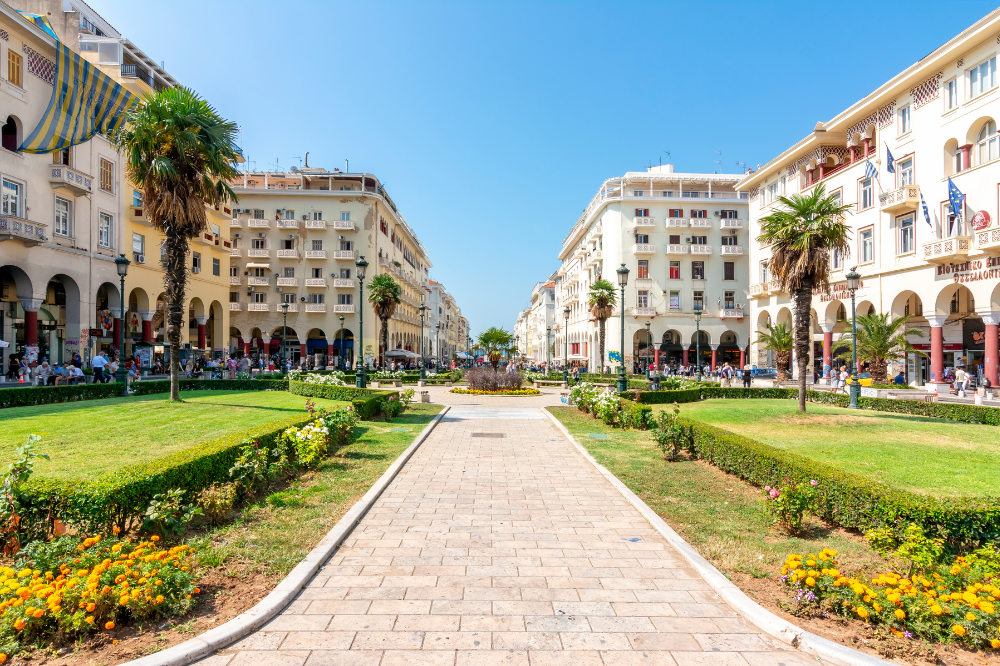
Thessaloniki, in the north of the country, balances modern city life with history. Landmarks include the Ancient Forum and the Rotunda, which dates back to the 4th century.
Its redeveloped waterfront is ideal for walking and cycling, and the city has plenty of restaurants, bars, theatres, cinemas and festivals. It is quieter than many Greek destinations in summer, as it is less focused on tourism.
Thessaloniki is one of the more affordable places to live in Greece. Winters are cooler than in the south and on the islands, so pack accordingly.
Kos

Kos offers sunshine, clear water and fascinating monuments. Its beaches range from lively spots with beach bars to quieter coves such as Limnionas, Markos and Paradise Beach.
Kos is great for cyclists. Most of the island is flat, with a network of bike lanes and parking, while the hills of the central Dikaios range offer a challenge.
History is everywhere. Kos Town is home to the Tree of Hippocrates, where the father of medicine is said to have taught his students, and to Neratzia Castle, which overlooks the harbour.
Frequently asked questions
- Can I move to Greece from the UK after Brexit?
Yes. You need a national visa for your purpose of stay, such as work, digital nomad, family or retirement, then a temporary residence permit after you arrive. Without a permit, you can only stay 90 days in any 180.
- How do I move to Greece from the UK?
Choose the right visa, apply through the Greek Embassy in London, then register with the Hellenic Police within 90 days of arriving. Arrange your AFM tax number, healthcare and shipping in parallel.
- Can I retire to Greece from the UK?
Yes. Many retirees use the financially independent person route, which requires proof of a regular income. Check the current income level with the Greek authorities before applying.
- Do I need to pay tax in Greece?
If you become tax resident in Greece, you will usually pay Greek tax on your income. The UK and Greece have a double taxation agreement, and taking professional advice is a good idea.
- Can I drive in Greece on a UK licence?
Yes, for up to six months. After that you should exchange your UK licence for a Greek one.
- What is the cheapest place to live in Greece?
Thessaloniki and many towns on the mainland are generally cheaper than Athens and the most popular islands, such as Santorini.
- How long does it take to ship belongings to Greece?
Timescales depend on whether you share space or book a dedicated vehicle or container, and whether you are moving to the mainland or an island. Your removal company will confirm this after a survey.
If you love history, culture and sunshine, Greece is a wonderful place to make your new home. Request a free quote for your international move, or call our expert team on 0800 019 8556 for personalised advice on moving to Greece from the UK.