How to maximise your garage space with smart organisation
To maximise your garage space, choose a dry spell to clear it completely, decide what the garage is really for, sort everything into keep, move out, sell or donate and dispose, then store what remains on the walls and ceiling rather than the floor. A clear, organised garage can fit the car again, keep tools easy to find and give seasonal items a proper home.
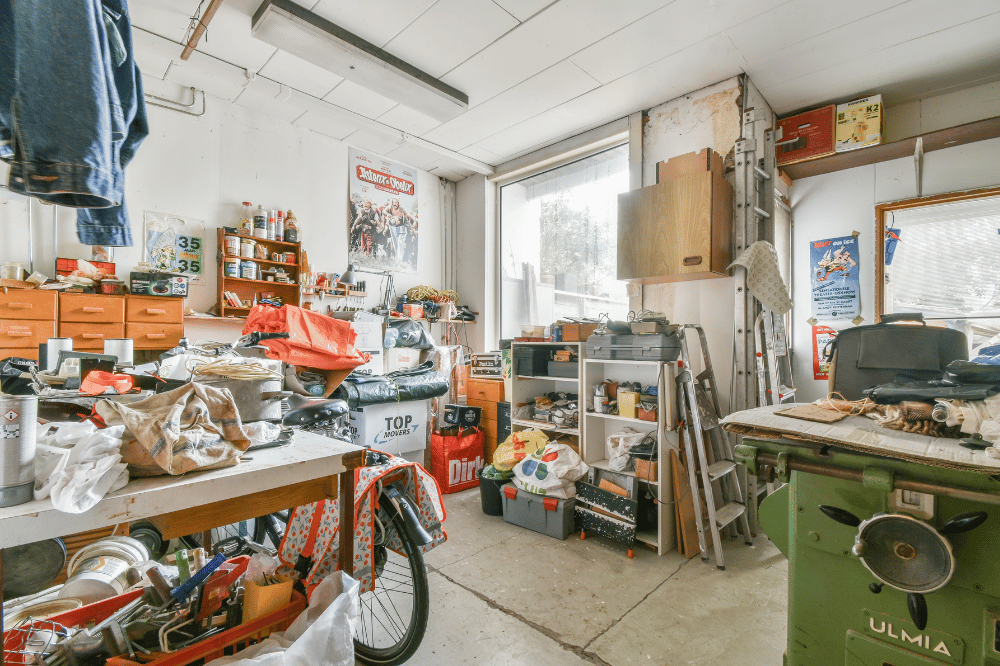
Choose the right time of year
A garage clear-out takes at least a day, and almost everything will spend time on the driveway, so the weather matters.
Time of year | Why it works or not |
Late April to June | Long, often dry days. A good time to sort garden equipment before summer |
September to early October | Usually mild and settled. Clear the garage before garden furniture and bikes need a winter home |
July and August | Workable, but recycling centres and charity collections are busier, and summer holidays can disrupt plans |
November to March | Best avoided. Short days, cold and frequent rain mean items stay damp, and anything that goes back wet can develop mould or rust |
Check the forecast and pick two dry days in a row: one to clear and sort, and one for cleaning, drying and putting things back. Bank holiday weekends give you an extra day, but recycling centres are often at their busiest, so book a slot early if your council requires one.
Step 1: decide what your garage is for
Before you move anything, decide on its main job. This decides what stays and what goes.
- Parking: measure your car's width with the doors open to see how much room is left for storage along the sides.
- Workshop: plan a workbench area with good lighting and power.
- Storage: dedicate zones to garden equipment, sports gear and household overflow.
- Gym or utility space: keep the floor clear and storage on the walls.
Most garages do two jobs, such as parking and storage. Knowing that upfront stops the space from filling up again.
Step 2: plan your clear-out day
- Book a recycling centre slot if your council requires one.
- Arrange charity collections for furniture and electricals in good condition.
- Consider a skip if you have a lot to dispose of. A skip placed on the road needs a council permit, which most skip hire companies arrange for you.
- Have gloves, bin bags, labels, marker pens and a few sturdy tubs ready.
- Ask a friend or family member to help with heavy items.
Step 3: empty and sort
Take everything out onto the driveway. This is the only way to see exactly what you have and to clean the floor. Sort into four areas:
Group | What goes in it |
Keep in the garage | Tools, garden equipment, bikes and items you use every month |
Move elsewhere | Seasonal and occasional items, plus anything that does not cope well with damp |
Sell or donate | Duplicate tools, bikes and toys children have outgrown, unused sports and fitness equipment |
Dispose of responsibly | Broken items, old paint and expired chemicals |
Dealing with hazardous items
- Old paint: water-based paint can be dried out and disposed of, while solvent-based paint and chemicals should go to a recycling centre that accepts them. Check your council's guidance.
- Fuel and gas bottles: return gas bottles to the supplier and store fuel in approved containers, away from heat.
- Batteries: use battery recycling points.
- Old electricals: recycle them at a recycling centre or retailer take-back point.
- Asbestos: older garages may have asbestos cement roof sheets or floor tiles. Do not break, drill or sand them. Contact your council or a licensed specialist for advice.
Step 4: check for damp
Garages are rarely heated, and condensation is common in winter. Before putting anything back:
- Look for damp patches, water stains or mould on the walls and floor.
- Check the door seals and gutters, which are common sources of leaks.
- Improve ventilation with air bricks or by opening the door on dry days.
- Consider a dehumidifier if the garage is attached to the house and has power.
- Keep everything on shelving or pallets, at least a few centimetres off the floor.
Step 5: plan your zones
Zone | What goes there | Placement |
Everyday | Bikes, shoes, shopping bags and recycling | Nearest the door |
Workshop | Hand tools, power tools and hardware | Along a wall with light and power |
Garden | Mower, garden tools and hoses | Near the garden exit, if there is one |
Sports and leisure | Balls, rackets, camping kit | In labelled tubs on shelves |
Occasional | Items used once or twice a year | High shelves |
Overhead | Ladders, roof boxes and long items | Ceiling racks |
Garage storage ideas that make the most of the space
Shallow shelving along the side walls
Shelving around 40 to 45cm deep holds a standard storage tub while keeping as much width as possible for the car. Fix tall shelving units to the wall so they cannot tip.
Pegboards and wall rails
Hanging tools on a pegboard or rail keeps them visible and off the worktop. Draw around each tool so you can see at a glance when something has not been put back.
Vertical bike storage
Wall-mounted bike hooks or a vertical rack take one bike off the floor in about the width of a handlebar.
Ceiling racks
Overhead racks suit light items such as camping equipment and empty tubs. Check the ceiling structure and weight limit before fitting one, and keep heavy items low.
Clear, labelled tubs
Lidded clear tubs keep out dust and damp and let you see what is inside. Use one size so they stack neatly and label the front, not the lid.
A fold-down workbench
In a single garage, a wall-mounted bench that folds flat gives you a workspace without taking up parking space.
A parking guide
A wall-mounted bumper or a simple stop marker on the floor shows exactly where to stop the car, so you do not damage the shelving.
Keep your garage secure
- Keep the garage door locked, even when you are at home.
- Fit an additional lock to up-and-over doors.
- Do not leave tools such as ladders and spades where they could be used to break into the house.
- Mark valuable tools and bikes with your postcode, and register bikes with a bike registration scheme.
- Keep power tools and bikes out of sight of windows.
What to move out of your garage
Some items do not cope well with the cold and damp of an unheated garage:
Item | Why it should move | Better place |
Paperwork, books and photographs | Damp causes mould and warping | Indoors or a self storage unit |
Mattresses, upholstered furniture and textiles | They absorb moisture and odours | Indoors or a self storage unit |
Water-based paint | Freezing can ruin it | Indoors over winter |
Electronics | Condensation can damage them | Indoors |
Standard fridges and freezers | Many are not designed to run in very cold temperatures | Check the model is suitable for a garage |
Garden furniture over winter | Takes up the space needed for the car | A self storage unit or covered outside |
Our guide on how to store garden furniture over winter explains how to prepare each material before it goes away.
Self storage for garage overflow
If the garage still cannot hold everything after a clear-out, a self storage unit can take the seasonal and occasional items, from garden furniture and Christmas decorations to camping equipment and spare furniture. Self storage at Pickfords starts from £18 a month including VAT.
Container storage and traditional self storage are quick access options, ideal for seasonal items you swap in and out. Drive-up self storage is a long-term option for belongings you will not need for several months. Pickfords offers free collection for drive-up self storage and storage containers in Horsham, Edinburgh and Manchester.
If you are storing tools or garden machinery away from home, our guide to tools and gear storage explains how to prepare them. Fuel, gas bottles and chemicals cannot be stored, so check our guide to things you should not put in a self storage unit before you pack.
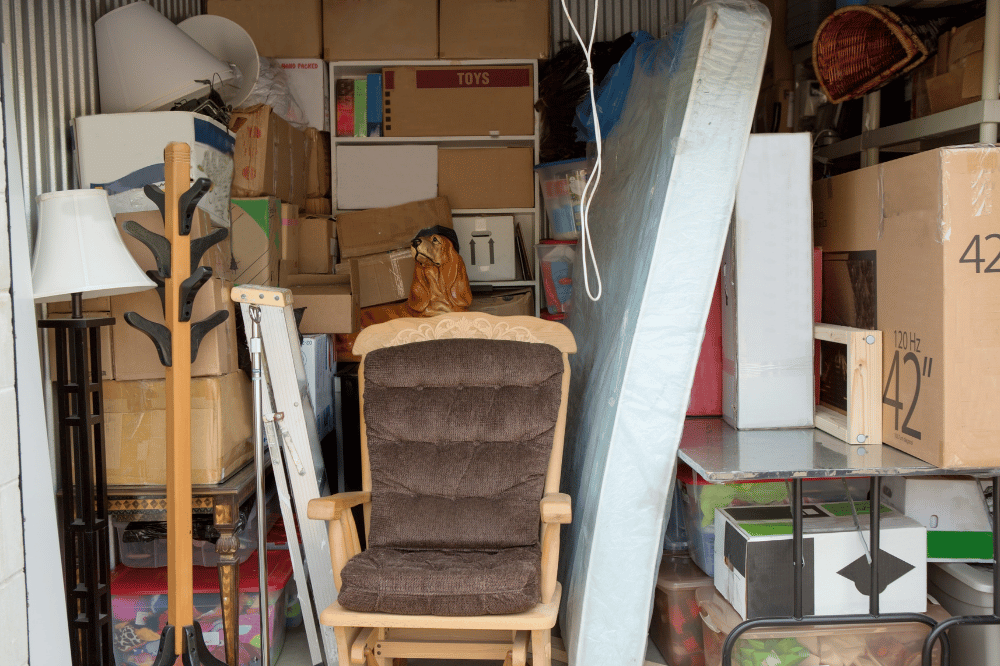
Keeping it organised
- Put tools back at the end of each job.
- Do a 30-minute tidy at the start of spring and autumn.
- Follow a one in, one out rule for tools and sports equipment.
- Review the garage at the same time as the rest of the house. Our guide to decluttering room by room gives you a simple method.
Garage clear-out checklist
Task | Done |
Pick two dry days in spring or early autumn | - |
Book a recycling centre slot, skip or charity collection | - |
Empty the garage and sort into four groups | - |
Dispose of paint, chemicals and batteries safely | - |
Check for damp and leaks | - |
Fit shelving, hooks and racks | - |
Put items back by zone | - |
Check the garage is secure | - |
Frequently asked questions
- When is the best time to clear out a garage?
Late spring and early autumn are usually best, as the days are longer and drier. Avoid winter, when items left outside can stay damp.
- How do I organise a cluttered garage?
Empty it, sort items into keep, move elsewhere, sell or donate and dispose, then plan zones and use the wall and ceiling space.
- What should not be stored in a garage?
Paperwork, photographs, mattresses, upholstered furniture, electronics and water-based paint can be damaged by cold and damp.
- How deep should garage shelves be?
Shelves around 40 to 45cm deep hold a standard storage tub while leaving more room for the car.
- Do I need a permit for a skip?
A skip placed on the road needs a council permit, which most skip hire companies arrange for you.
- Can I store garage items in a self storage unit?
Yes, as long as they are clean, dry and free of fuel. Self storage at Pickfords starts from £18 a month including VAT.
Reclaim your garage with Pickfords
Move seasonal and occasional items out of your garage and into secure self storage. Enter your postcode to find self storage near you, or contact Pickfords today to discuss your storage needs.