A practical guide to clearing your home and deciding what to keep
A house clearance is easier when you sort every item into one of four groups: keep, sell, donate or store. Anything left over is recycled or disposed of responsibly. Whether you are downsizing, preparing a property for sale or clearing the home of a relative, this approach helps you make clear decisions and avoid parting with belongings you may later want.
This guide covers how to plan a clearance, where to look for important paperwork and valuables, how to sell, donate and dispose of items within UK rules. It also explains when storage can give you more time.

When you might need a house clearance
- Downsizing: moving to a smaller home with less space for furniture.
- Selling a property: clearing rooms before completion or to prepare for viewings.
- After a bereavement: clearing the home of a parent or relative.
- Moving into care or sheltered housing: keeping a few treasured items and finding homes for the rest.
- End of a tenancy: returning a rental property empty, as agreed in the tenancy.
- Landlords: clearing items left behind between tenants.
How long does a house clearance take?
The time needed depends on the size of the property, how full it is and how many people are helping. As a rough guide for a clearance you carry out yourself:
Property | Typical time to sort and clear |
Studio or one-bedroom flat | One to two days |
Two to three-bedroom house | Three to five days |
Four-bedroom house or larger | A week or more |
A home lived in for many years, with a full loft and garage | Allow extra time, often several weekends |
Sorting takes far longer than removing items, so plan most of your time for decisions rather than lifting.
Before you start
Set a realistic timeline
Work back from any fixed dates, such as a completion date, tenancy end date or the date a property must be handed back. Book any removals, storage and waste collections early, as availability can be limited at busy times.
Agree who is involved
If you are clearing a family home, agree in advance who will make decisions and how items will be shared. A simple method is to give each person coloured stickers and take turns choosing items, so everyone has a fair say.
Look after the empty property
- Take meter readings and contact the energy and water suppliers.
- Set up a Royal Mail redirection so post is not left at an empty property.
- Check the home insurance policy, as many policies have conditions for properties left unoccupied for a period of time.
- Keep track of every set of keys.
Gather supplies
You will need sturdy boxes, labels, marker pens, bin bags, packing paper and gloves. Set out separate areas or boxes for keep, sell, donate, recycle and store.
Find important paperwork and valuables first
Before anything leaves the property, search carefully for documents and items of value. Look for:
- wills, property deeds and tenancy agreements
- bank, building society and pension statements
- share certificates, savings bonds and policy documents
- passports, birth and marriage certificates
- jewellery, watches, cash and spare keys
- photographs, letters and items of sentimental value
Valuables and paperwork are often found in unexpected places. Check coat pockets, handbags, inside books, under drawer linings, behind and beneath furniture, in tins and envelopes, in the freezer and in the loft, shed and garage.
Keep everything you find together in one secure box. Our guide to document storage explains how to organise paperwork you need to keep.
Where to start
Begin with the areas used least, such as the loft, garage, shed and spare rooms. These often hold the most items, and clearing them first creates space to sort the rest of the home. Leave the kitchen and the rooms you are using until last.
For tips on individual rooms, see our guide to decluttering room by room.
Step 1: decide what to keep
Start with the items you are certain you want: furniture you will use, photographs, sentimental pieces and valuables. Label these clearly so they are not removed by mistake.
If you are unsure about an item, ask yourself whether you will use it, whether you have space for it and whether it would be difficult to replace. Large collections of photographs, letters and documents can be scanned, so you keep the memories without the boxes.
Step 2: sell items of value
Items that often sell well include:
- antique and solid wood furniture
- jewellery, watches and silverware
- artwork, ceramics and collectibles
- vinyl records, cameras and musical instruments
- quality tools and garden equipment
- designer clothing and accessories
If you think something may be valuable, get a valuation from an auction house or specialist dealer before you decide. Selling routes include local auction houses, antique and second-hand dealers, online marketplaces and car boot sales. Selling takes time, so store items you plan to sell if the property needs to be cleared first. Our guide to art storage explains how to protect paintings and fragile pieces.
Step 3: donate items in good condition
Charity shops and furniture reuse charities welcome clothing, books, homeware, toys and furniture in good condition. Many offer free collection for larger items, but slots fill quickly, so book in advance.
Upholstered furniture such as sofas, armchairs and upholstered headboards must carry a permanent fire safety label to be accepted by a charity. This requirement comes from the Furniture and Furnishings (Fire) (Safety) Regulations 1988. Check for the label before you arrange a collection. Mattresses and bed bases follow separate rules, so ask the charity first.
Some charities also accept electrical items, although they may need to be safety tested first. Check with the charity before donating.
Step 4: recycle and dispose of the rest responsibly
Council recycling centres and bulky waste
Your local household waste recycling centre can take most household items. Many centres now require you to book a slot, so check your council's website before you go. Most councils also offer a bulky waste collection service for large items such as furniture and white goods.
Sofas and upholstered seating
Upholstered seating, including sofas, armchairs, upholstered dining chairs and footstools, may contain persistent organic pollutants (POPs). Many councils now ask for these items to be kept separate from general waste so they can be disposed of safely. Check your council's guidance before taking upholstered furniture to a recycling centre.
Electrical items
Electricals should never go in general waste. Take them to a recycling centre, use a retailer take-back scheme when you buy a replacement or arrange a bulky waste collection for large appliances. Before recycling or donating laptops, phones and tablets, back up anything you want to keep and reset the device to erase personal data.
Hazardous items
Some items need special handling:
- Paint, solvents and garden chemicals: take them to a recycling centre that accepts them.
- Gas bottles: return them to the supplier or a recycling centre that accepts them.
- Batteries: use battery recycling points at recycling centres and many shops.
- Medicines: return unused medicines to a pharmacy.
- Asbestos: if you suspect a material contains asbestos, such as old floor tiles or garage roof sheets, do not disturb it. Contact your council or a licensed specialist for advice.
Using a house clearance company
If you are short of time, a house clearance company can remove unwanted items for you. Before you agree to anything:
- Check they are a registered waste carrier. In England, you can search the Environment Agency's public register. Scotland, Wales and Northern Ireland have their own registers.
- Get a written quote that states what is included.
- Ask where items will go, and how much will be reused, recycled or sent to landfill.
- Ask for a receipt or waste transfer note that names the company.
- Be cautious of very low prices and cash-only offers.
Householders have a legal duty of care to make sure their waste goes to a licensed carrier. If waste is fly-tipped by an unlicensed carrier, the householder can be fined.
Separate everything you want to keep, sell or store before the clearance company arrives, so nothing is removed by mistake.
Clearing a family home after a bereavement
Clearing the home of a parent or relative can be an emotional task, and there is no need to make every decision at once.
- Use Tell Us Once. This government service lets you report a death to most government departments in one go.
- Check the will first. Make sure items that have been left to specific people are set aside.
- Speak to the executor or a solicitor before selling or giving away items. The value of the contents may need to be recorded for probate, or confirmation in Scotland, and for any Inheritance Tax due.
- Get professional valuations for items that may be valuable.
- Keep a record of what is removed, sold or given away, including dates and amounts.
For guidance on estates and probate, visit GOV.UK or speak to a solicitor.
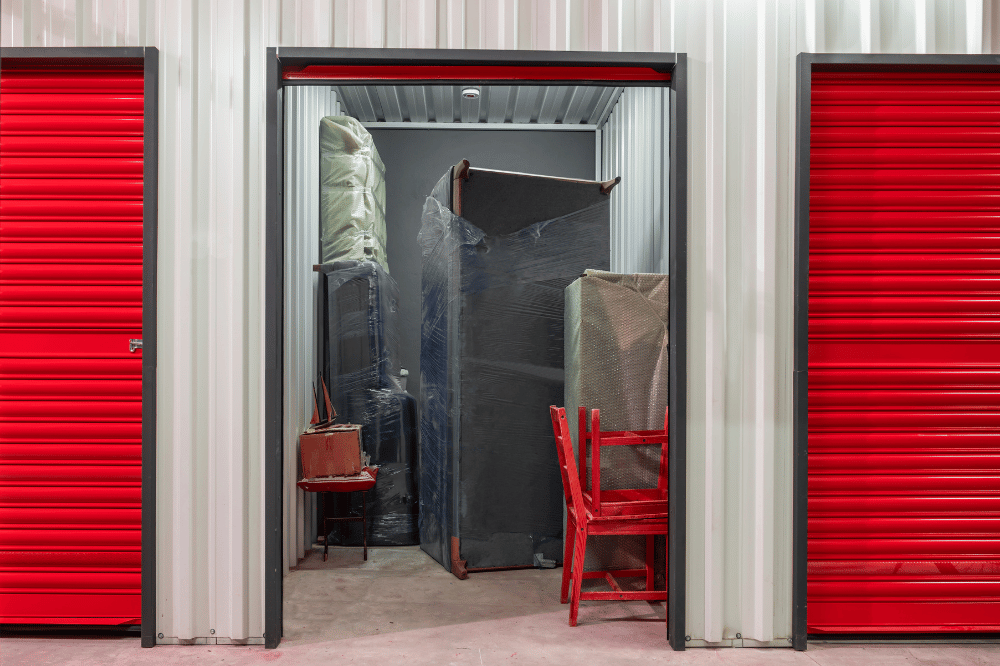
Storing furniture and personal belongings gives you and your family time to decide what to keep, without the pressure of a deadline. It also keeps the contents safe while the estate is settled.
How self storage helps with a house clearance
- It lets you clear the property quickly for a sale, a handover or the end of a tenancy.
- It gives family members time to decide what they would like to keep.
- It keeps furniture and valuables safe while you arrange sales, valuations or probate.
- It means you can keep items for a future home.
Self storage at Pickfords starts from £18 a month. Drive-up self storage is a long-term option, ideal when an estate may take months to settle. Container storage and traditional self storage offer quick access if you need to visit your unit often, for example to show items to family or buyers. Pickfords offers free collection for drive-up self storage and storage containers in Horsham, Edinburgh and Manchester.
Read how to prepare furniture for a self storage unit to protect larger items, and see how to create a storage unit inventory so you know exactly what you have stored.
Moving belongings from a clearance
If you are moving furniture to a new home, to family members or to storage, Pickfords removals can help with careful packing and transport. Read more about using self storage during a house move.
House clearance checklist
Stage | Task | Done |
Plan | Agree who is involved and set a timeline |
|
Plan | Book removals, storage and waste collections |
|
Protect | Take meter readings and set up a post redirection |
|
Protect | Check the home insurance conditions for an empty property |
|
Search | Locate paperwork, valuables and items named in the will |
|
Sort | Label items to keep |
|
Sell | Arrange valuations for items that may be valuable |
|
Donate | Check fire labels and book charity collections |
|
Dispose | Book recycling centre slots or a bulky waste collection |
|
Dispose | Separate electricals, upholstered seating and hazardous items |
|
Check | Confirm any clearance company is a registered waste carrier |
|
Store | Move items you are keeping into storage |
|
Finish | Clean the property and return the keys |
|
For more ideas on creating space, see ways you can utilise storage to declutter your home.
Frequently asked questions
- How do you start a house clearance?
Set a timeline, agree who is involved and search the property for paperwork and valuables before anything is removed. Then sort items into keep, sell, donate, recycle and store.
- How long does a house clearance take?
As a rough guide, a one-bedroom flat takes one to two days and a three-bedroom house takes three to five days. A home with a full loft and garage can take longer.
- Will a charity take my sofa?
Only if it has a permanent fire safety label attached. Check for the label before booking a collection.
- How do I check a house clearance company is legitimate?
Check they are on the public register of waste carriers, get a written quote, ask where items will go and ask for a receipt or waste transfer note.
- Can I clear a house before probate is granted?
Speak to the executor or a solicitor first, as the contents may need to be valued for probate. Keep a record of anything removed, sold or given away.
- What should I do with furniture I want to keep but have no room for?
Store it. Self storage at Pickfords starts from £18 a month, and drive-up self storage is designed for long-term storage.
Get help with your house clearance
Pickfords can help you move and store the belongings you want to keep, giving you time to make the right decisions. Contact Pickfords today to discuss your storage needs, or request a free quote for your move.