How to move a washing machine and fridge freezer safely
If you are planning a house move, your large kitchen appliances need more care than almost anything else you own. Knowing how to move a washing machine properly, and how to move a fridge freezer without harming its cooling system, can save you from leaks, damaged drums and an expensive repair after moving day. This guide takes you through each step, from fitting washing machine transit bolts to letting your fridge freezer settle before you switch it back on.
Both appliances are heavy and awkward to carry, and a little preparation in the days before you move makes a real difference.
Why do washing machines and fridge freezers need extra care?
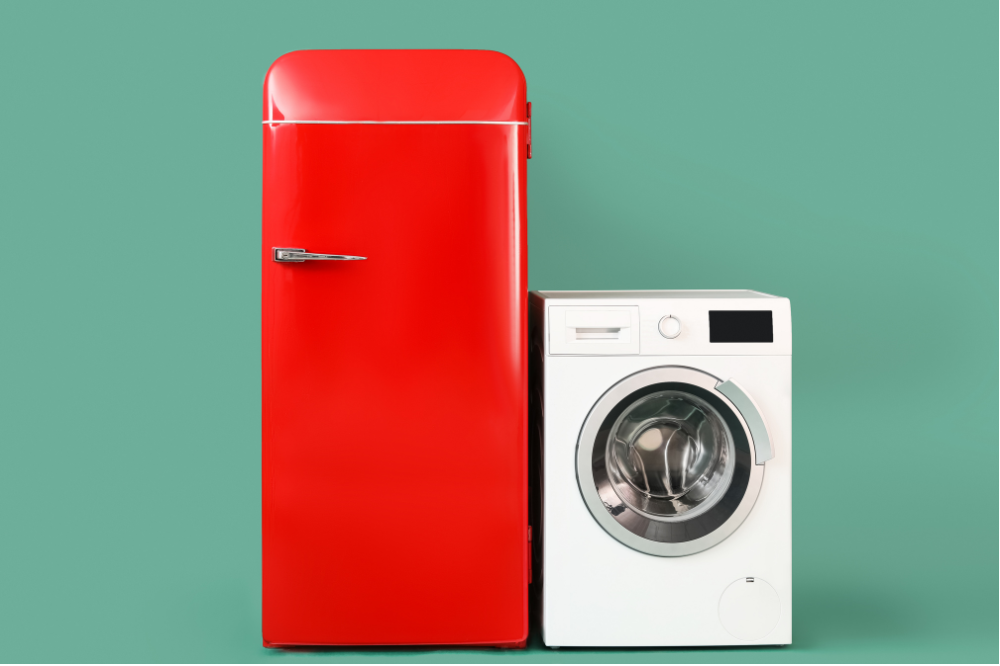
A washing machine drum hangs on springs and shock absorbers so that it can spin freely. Most machines also contain a heavy concrete counterweight, which is why they often weigh well over 60kg. When the machine is moved, the drum can swing and bang against the casing, straining the suspension and bearings. Water left in the pump and hoses can also leak out in the van or onto your floors.
A fridge freezer has a sealed cooling system. The compressor contains oil, and refrigerant circulates through pipes at the back. If the appliance is tipped or jolted, oil can move into the cooling pipes, which is why settling time matters once it arrives. Ice that has not been defrosted will melt in transit, and loose glass shelves can crack.
How to move a washing machine: step by step
When should you start preparing?
Do your last wash at least a day before moving day, and ideally two. This gives the drum, door seal and detergent drawer time to dry out, which helps prevent musty smells and mould. Leave the door and drawer slightly open after the final cycle.
How do you disconnect a washing machine?
- Switch the machine off at the wall and unplug it.
- Turn off the water supply valve (or valves, if you have hot and cold fill) behind the machine.
- Pull the machine out gently and put old towels and a shallow tray underneath the connections.
- Unscrew the inlet hose from the supply valve and let any remaining water drain into the tray.
- Unhook the drain hose from the standpipe or the waste connection under your sink.
- Either remove both hoses and pack them in a labelled bag, or tape them securely to the back of the machine.
How do you drain the water left inside?
Even after a spin cycle, some water stays in the pump and filter. On most front-loading machines, the filter sits behind a small flap at the bottom of the front panel, often with a thin emergency drain tube beside it. Place a low tray underneath, release the tube or slowly unscrew the filter, and let the water run out. Expect more than you might think. While the filter is out, clean away any fluff or coins, then refit it firmly.
What are washing machine transit bolts and why do they matter?
Washing machine transit bolts (sometimes called shipping bolts) are long bolts that lock the drum in place so it cannot move while the machine is being transported. They are fitted at the factory and removed when the machine is first installed. Most machines use three or four, and they screw in through the back panel, often with plastic spacers attached.
Without transit bolts, the drum is free to swing on its suspension every time the van brakes or turns a corner. This can damage the springs, dampers, bearings or the drum itself. Some manufacturers may also decline warranty claims for damage caused by moving a machine without them, so check your warranty terms.
How do you refit washing machine transit bolts?
- Find your bolts. They are often kept with the instruction manual or taped to the machine by the original installer.
- Check the manual to confirm where they go. The holes on the back panel are usually covered with plastic caps.
- Remove the caps and keep them somewhere safe for later.
- Insert each bolt with its spacer and tighten it with a spanner until it feels snug. Avoid overtightening.
- If a bolt will not line up, gently lift the drum from inside the door to bring the holes into position.
What if you have lost the transit bolts?
Transit bolts are specific to the make and model, so start by finding the model number, usually printed on a label inside the door or on the back panel. You can then order replacements from the manufacturer or an appliance parts supplier. Universal kits exist, but check carefully that they fit your machine, and order a couple of weeks ahead. If you cannot get them before moving day, tell your removal team so they can take extra care to keep the machine upright, padded and secured.
Do you need to remove them again after the move?
Yes. Never run your washing machine with the transit bolts fitted. The drum would be unable to move, causing heavy vibration and potentially serious damage. Remove the bolts before your first wash in your new home, refit the plastic caps, and keep the bolts with your manual for next time.
How to move a fridge freezer without damaging it
How far in advance should you defrost a fridge freezer?
Start running down your fresh and frozen food about a week before you move. Switch the fridge freezer off and unplug it at least 24 hours before moving day. Leave the doors open, lay towels on the floor and place a tray under the freezer section to catch meltwater. If your model has a drip tray, empty it once defrosting is complete.
How should you clean and prepare the inside?
Once it has defrosted, wipe the inside with warm water and a little bicarbonate of soda, then dry every surface thoroughly, as moisture left inside a closed fridge can lead to mould and smells. Take out shelves, drawers and glass panels and wrap them separately. Secure the doors with a strap or low-tack tape that will not mark the finish, and tape the power cable to the back.
Should a fridge freezer travel upright or on its side?
Upright is always best, because it keeps the compressor oil where it should be. If your fridge freezer has to lie down, for example to get it through a low doorway, check your manual first. Where manufacturers allow it, they usually recommend laying it on its side. Avoid laying it on its back unless the manual says this is acceptable, as this can put pressure on the cooling components at the rear.
How long should a fridge freezer stand before you switch it on?
Guidance varies between manufacturers, so follow your manual where you can. If the appliance stayed upright the whole time, a few hours is often enough. If it travelled on its side, a common rule is to leave it standing upright for at least as long as it was lying down, and many people wait overnight to be safe. Once you switch it on, give it several hours to reach temperature before you restock. The Food Standards Agency recommends keeping your fridge at 5°C or below, and freezers typically run at around minus 18°C.
What about American-style and plumbed-in fridge freezers?
If your fridge freezer has a water dispenser or ice maker connected to the mains, turn off the water supply, disconnect the water line and empty any internal tank and ice tray before moving. These models are often much wider and heavier than standard appliances, so measure doorways carefully. Sometimes the doors need to be removed to get the appliance in or out, which is a job best left to experienced professionals.
How do you lift and carry heavy appliances safely?
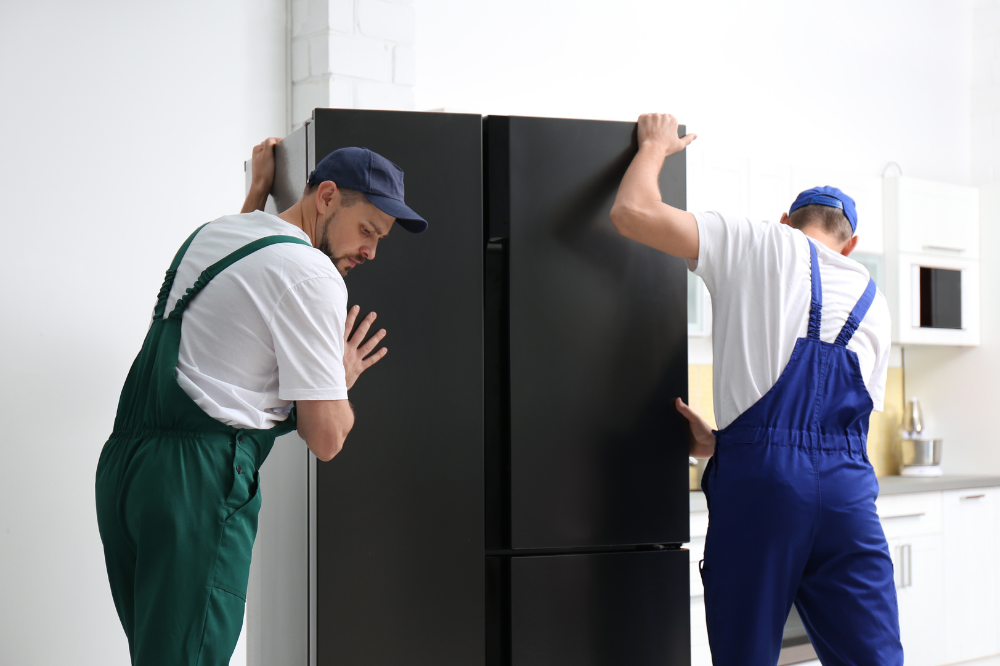
- Always use at least two people, and never try to move either appliance alone.
- Use an appliance trolley or a sack truck with straps where you can.
- Measure doorways, hallways and stairwells in both homes before moving day.
- Clear your route and protect floors and doorframes with blankets or boards.
- Lift with your legs and keep your back straight. Never lift by the door, handles or worktop lid.
- In the van, keep both appliances upright, strapped and padded, with nothing heavy stacked on top.
What about integrated appliances?
Integrated appliances sit behind kitchen cabinet doors, so removing them usually means unscrewing the decor door and sometimes parts of the cabinetry. You may want a kitchen fitter to help. Measure the space in your new kitchen too, as built-in appliances do not always suit a different layout.
How do you reconnect everything in your new home?
For your washing machine, remove the transit bolts first and fit the plastic caps. Position the machine on a level floor and adjust the feet using a spirit level. Connect the inlet hose to the cold supply, checking that the rubber washers are in place, and tighten by hand. Fit the drain hose into the standpipe at the height shown in your manual, then turn the water on and look for leaks. An empty hot wash is a good first test.
For your fridge freezer, position it with the ventilation gap the manufacturer recommends, level it, and wait for the settling time before switching on. If plumbing or sockets are not in the right place, use a qualified plumber or electrician.
Frequently asked questions
- Can I move a washing machine without transit bolts?
It is possible, but it carries a real risk of damage to the drum and suspension. Replacement bolts for most models are easy to order using the model number.
- Where are washing machine transit bolts located?
They screw in through the back panel. Most models use three or four, and the holes are usually covered by plastic caps once the bolts are removed.
- How long after moving can I use my washing machine?
As soon as it is reconnected, level and the transit bolts are removed. Running an empty cycle first helps you spot any leaks.
- Can I transport a fridge freezer lying down?
Upright is best. If it must lie down, check your manual, use the side the manufacturer recommends and allow extra settling time.
- Do I need to defrost a frost-free fridge freezer before moving?
Yes. There will be less ice, but you should still switch it off at least 24 hours ahead, then clean and dry the inside.
Ready to plan your move?
Moving heavy appliances is one part of a much bigger job, and the right help makes moving day far more straightforward. Pickfords removal teams are experienced in wrapping, carrying and securing large household items so they reach your new home in good condition. When you get a quote, ask whether appliance disconnection and reconnection can be arranged, as options can vary by location. To start planning, get a quote or book a free home survey with Pickfords.