How to store garden furniture over winter
To store garden furniture over winter, clean and dry every piece, treat it according to its material, bring cushions and fabrics indoors and keep the furniture dry and off the ground until spring. In the UK, it is the combination of rain, frost and long damp spells that causes most damage, so the aim is simple: put everything away clean and dry, and keep it that way.
This guide covers when to start, how to care for each material, how to deal with cushions, parasols, barbecues and garden machinery, how much space a typical set needs and how to bring everything back out in spring.
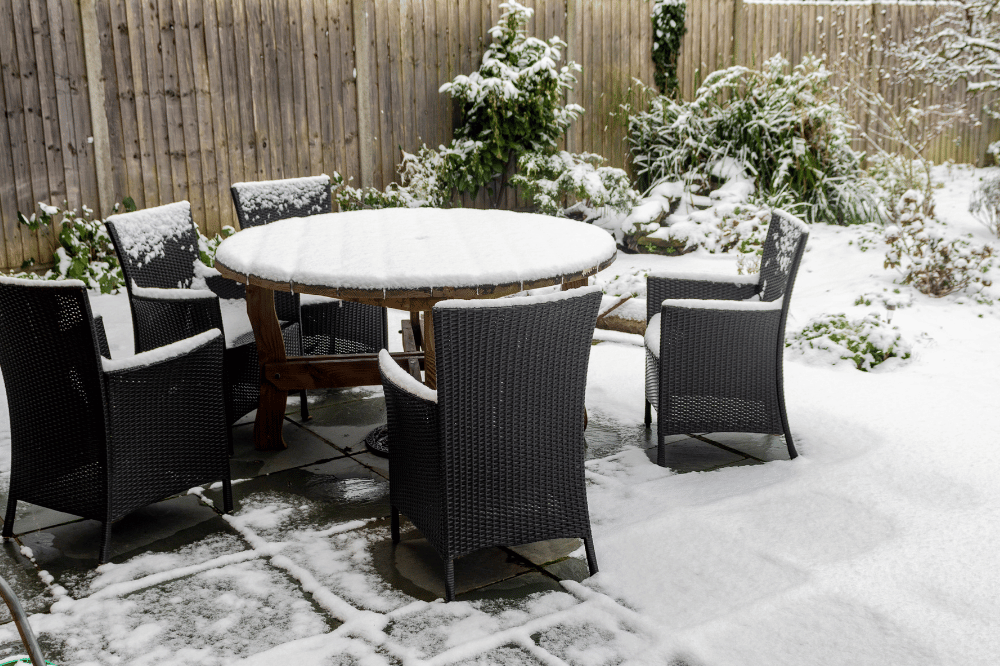
When to put garden furniture away
First frosts usually arrive earlier in Scotland and northern England than in the south, and gardens in rural or low-lying areas often see frost before those in towns. As a general guide:
Area | Aim to have furniture stored by |
Scotland and northern England | Mid October |
The Midlands and Wales | Late October |
Southern England and coastal areas | Early November |
Frost dates vary from year to year, so check the forecast for your area. Choose two or three dry days in a row: one to clean, and one or two for everything to dry fully. Furniture that goes away damp is far more likely to develop mould, mildew or rust.
What you will need
- a bucket, warm soapy water and a soft brush
- a wire brush, fine sandpaper and rust-inhibiting paint for metal
- a wood oil or preservative suited to your furniture
- microfibre cloths and an old towel
- breathable storage bags for cushions
- breathable, waterproof covers for anything staying outside
- labelled freezer bags for screws, bolts and fittings
- bricks, blocks or furniture feet to raise pieces off the ground
How to prepare each material
Hardwood such as teak, acacia and eucalyptus
Wash with warm soapy water and a soft brush, working along the grain. Avoid using a pressure washer at close range, as it can raise and roughen the surface. Once dry, decide how you want it to look: teak left untreated weathers naturally to a silver-grey, while a coat of teak oil keeps its warm colour. Acacia and eucalyptus benefit from oiling before winter, as they are less naturally resistant to water.
Softwood such as pine
Softwood is the most vulnerable to rot. Wash it, let it dry for at least 24 hours and apply a wood preservative or stain, paying attention to the feet and joints where water collects.
Wrought iron and steel
Wash and dry, then check every joint and the underside for rust. Rub any spots back with a wire brush or sandpaper, wipe off the dust and touch up with rust-inhibiting metal paint. Small chips are easy to fix now and much harder to fix in spring.
Aluminium
Aluminium does not rust, but it can develop a white, powdery surface if left wet. Wash, dry and store it where it will not be scratched or dented by heavier pieces.
Synthetic rattan
Brush out leaves and debris from the weave, wash with soapy water and rinse. The aluminium or steel frame inside the weave can hold water, so tip each piece on its side to drain and let it dry for a full day. Synthetic rattan can stay outside under a breathable cover, but it lasts longer stored indoors.
Natural rattan, wicker and bamboo
These absorb moisture and should always be stored indoors. Brush clean, wipe with a damp cloth only and allow to dry in a warm room before storing.
Plastic and resin
Wash with soapy water and avoid abrasive cleaners, which scratch the surface. Plastic can become brittle in hard frost, so store it under cover if you can.
Glass and ceramic tabletops
Remove the top if possible, wrap it in a blanket and store it upright indoors. Glass left outside can crack if water freezes underneath it.
Cushions, parasols and fabrics

Textiles cause the most problems in storage, as they hold moisture and can develop mildew within weeks.
- Remove cushion covers and wash them if the care label allows.
- Treat small mildew spots with a mild solution of white vinegar and water, testing on a hidden area first.
- Dry cushions and covers fully indoors, ideally for 24 to 48 hours. Squeeze the foam to check there is no moisture inside.
- Store cushions in breathable bags, never sealed plastic, which traps condensation.
- Brush the parasol canopy, leave it open to dry, then close it and store it in its cover.
- Empty water-filled parasol bases or bring them indoors, as water left inside can freeze and split the base.
- Wash and dry outdoor rugs, hammocks and seat pads before storing.
Barbecues, fire pits and outdoor heaters
- Barbecues: clean the grill bars, empty ash and grease trays and lightly oil the metal grill to help prevent rust.
- Gas bottles: disconnect them from barbecues and patio heaters. Store gas bottles outdoors, upright, in a well-ventilated place away from drains.
- Charcoal: keep it in a dry place in a sealed container, as damp charcoal is difficult to light.
- Fire pits: empty and clean them, let them dry and store them upside down or covered so rainwater cannot collect.
Gas bottles and fuel must never go into a self storage unit. Our guide to things you should not put in a self storage unit lists everything else to keep out.
Lawnmowers, tools and hoses
- Give the lawn its last cut, then clean grass cuttings from the mower deck.
- Drain petrol from mowers and strimmers, or run the engine until it stops.
- Remove batteries from cordless tools and store them indoors in a cool, dry place.
- Sharpen blades now, so tools are ready for spring.
- Drain and coil hoses and bring them indoors, as water left inside can freeze and split them.
- Turn off outdoor taps at the internal stop valve if you have one, and leave the outside tap open to drain.
If you are storing garden machinery away from home, our guide to tools and gear storage explains how to prepare fuel-powered and cordless equipment.
If furniture has to stay outside
Hardwood, aluminium and synthetic rattan can stay outside if they are protected properly:
- Raise every piece off the ground on bricks, blocks or furniture feet, so it does not sit in water.
- Use covers made from breathable, waterproof fabric with vents. Plastic sheeting traps condensation underneath.
- Choose covers that fit snugly and finish just above the ground, so air can circulate.
- Place a ball or upturned bucket under the centre of a table cover to stop rainwater pooling on top.
- Tie covers down and move furniture against a wall or fence for shelter from strong winds.
- Check under the covers once a month and after storms.
How much space does garden furniture need?
If you are planning to store your furniture in a garage, shed or self storage unit, this rough guide can help:
Garden furniture | Typical space needed when stacked |
Bistro set (two chairs and a small table) | A corner of a shed or a small unit alongside other items |
Four to six-seater dining set with parasol | Around 25 to 35 sq ft |
Rattan corner sofa set | Around 35 to 50 sq ft |
Dining set, sofa set, loungers and barbecue | Around 50 to 75 sq ft |
Where to store garden furniture over winter
Option | Advantages | Things to consider |
Garage | Close to hand and dry if well ventilated | Space is often limited, and furniture can block the car or tools |
Shed | Free and close by | Some sheds become damp in winter. Raise furniture off the floor |
Under covers in the garden | No indoor space needed | Furniture is still exposed to cold and wind |
Self storage unit | Keeps furniture dry and frees up your garage or shed | A monthly cost, from £18 a month including VAT at Pickfords |
Using self storage for garden furniture
A self storage unit keeps furniture dry and protected while giving you back your garage for the car, bikes and tools over winter. Many people store their furniture alongside other seasonal items, such as parasols, outdoor toys, paddling pools and camping equipment, and collect it all in one trip in spring.
Container storage and traditional self storage are quick access options, which suit seasonal storage well. Pickfords offers free collection for drive-up self storage and storage containers in Horsham, Edinburgh and Manchester, which saves loading heavy furniture yourself.

Packing garden furniture into a unit
- Only store items that are completely dry.
- Lay pallets or boards on the floor first.
- Place tables and sofa frames at the back, stack chairs and loungers in front.
- Keep cushions in breathable bags on top of hard furniture, never underneath.
- Wrap glass tops and stand them upright between soft items.
Getting ready for spring
When the weather warms up, usually from April, bring furniture out on a dry day. Wipe it down, check for rust spots or loose joints and give wooden pieces a fresh coat of oil or preservative before the first use. Air cushions in the sun for a few hours before putting them on the furniture.
Winter garden checklist
Task: - Choose two or three dry days
- Clean and fully dry all furniture
- Oil or treat wood and touch up rust on metal
- Wash, dry and bag cushions and fabrics
- Empty parasol bases and store the canopy dry
- Clean the barbecue and store the gas bottle outdoors
- Drain fuel from petrol machinery and bring batteries indoors
- Drain hoses and the outside tap
- Cover or store everything off the ground
Frequently asked questions- Can garden furniture be left outside in winter?
Hardwood, aluminium and synthetic rattan can stay outside under breathable, waterproof covers and raised off the ground. Natural rattan, wicker and cushions should always come indoors. - When should I put my garden furniture away?
Aim for mid October in Scotland and northern England and late October to early November further south, before the first hard frost. - How do you store rattan furniture over winter?
Brush and wash synthetic rattan, drain and dry the frame fully and store it under cover or indoors. Natural rattan should always be stored indoors. - Where should I store garden cushions in winter?
Store clean, completely dry cushions in breathable bags indoors or in a self storage unit. - Should I oil teak furniture before winter?
It is your choice. Untreated teak weathers to a silver-grey, while teak oil keeps its warm colour. Make sure it is fully dry first. - How much does it cost to store garden furniture over winter?
Self storage at Pickfords starts from £18 a month including VAT. Free up space this winter with PickfordsKeep your garden furniture protected and your garage clear until spring. Enter your postcode to find self storage near you, or contact Pickfords today to discuss your storage needs. |