How to store a wedding dress: A step by step guide
Your wedding dress is likely one of the most special garments you will ever own. Whether you hope to pass it down, have it altered into something new or simply keep it as a memento, it deserves careful handling once the celebrations are over. If you are wondering how to store a wedding dress so it stays clean, bright and free from damage, the good news is that the process is straightforward when you know what to do.
This guide takes you through each step, from cleaning to wrapping, boxing and choosing the right spot. Whether you married recently or have a wedding planned for 2027, these tips will help you protect your dress for years to come.
Why does careful storage matter for a wedding dress?
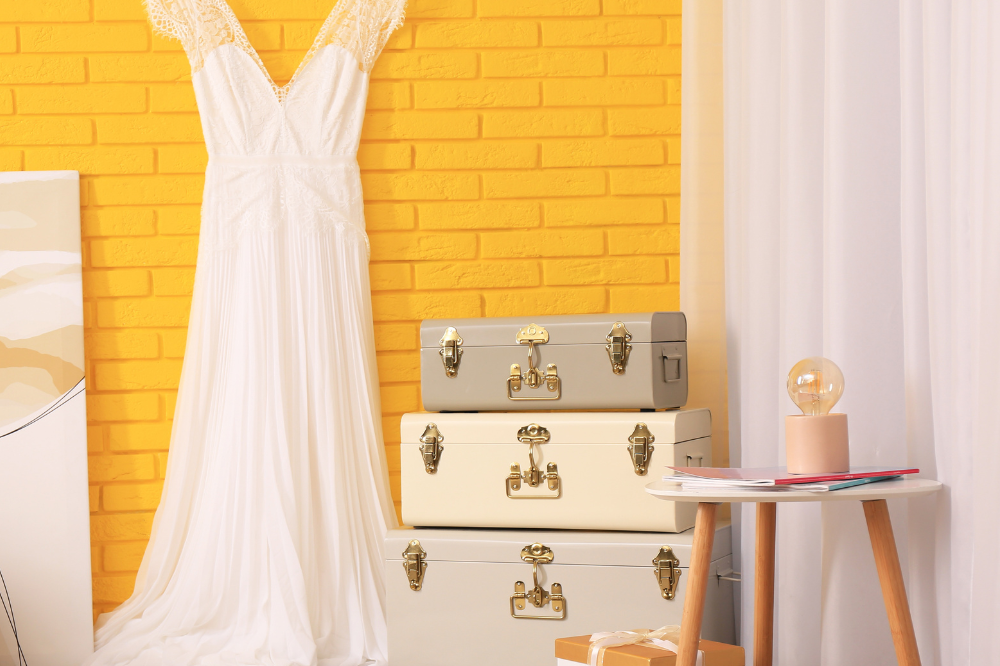
Wedding dresses are often made from delicate fabrics such as silk, satin, tulle, organza and lace, and many feature beading, sequins or embroidery. These materials can be damaged by light, moisture, acids in ordinary paper and cardboard, and even the weight of the dress itself.
Common problems caused by poor storage include:
- Yellowing, often caused by light exposure, acids or stains that were not removed
- Permanent creases where the fabric has been folded the same way for years
- Mould and mildew from damp conditions
- Stretched shoulders or seams from hanging a heavy dress for a long time
- Damage from moths and other insects
The steps below are designed to prevent each of these.
How to store a wedding dress: step by step
Step 1: Get the dress cleaned as soon as possible
Ideally, have your dress professionally cleaned within a few weeks of your wedding. Some stains, such as champagne, white wine, sugary drinks and perspiration, can be almost invisible at first. Over time, they can oxidise and turn yellow or brown, at which point they become much harder to remove.
Look for a cleaner who specialises in wedding dresses and ask about their experience with your fabric and any embellishments. Point out any marks you know about, including the hem, which often picks up grass and dirt. Prices for wedding dress cleaning and preservation vary widely depending on the fabric, detailing and service, so ask for a quote before you commit.
Step 2: Handle the dress with clean hands
Natural oils from your skin can transfer to fabric and cause marks over time. Wash and dry your hands well before handling the dress, or wear clean white cotton gloves. Remove rings and bracelets that might snag lace or beading.
Step 3: Remove anything that could damage the fabric
Take off any metal pins, clips or plastic hangers. Metal can rust and leave marks, and some plastics can give off chemicals over time. If your dress has detachable parts, such as a sash, belt or overskirt, store these separately but alongside the dress so nothing gets lost.
Step 4: Pad the dress with acid-free tissue

Acid-free tissue paper is one of the most important materials for storing a wedding dress. Ordinary tissue paper and cardboard contain acids that can transfer to fabric and cause yellowing or brown marks over time. Acid-free tissue is designed to avoid this.
Use the tissue to:
- Fill the bodice and sleeves gently so they keep their shape
- Pad each fold, so the fabric curves softly over a roll of tissue instead of creasing sharply
- Separate layers of fabric, especially around beading or sequins, to stop them catching
Choose unbuffered acid-free tissue for silk and wool, as buffered tissue is slightly alkaline and is better suited to cotton and linen. If you are unsure of your fabric, unbuffered tissue is generally the safer choice.
Step 5: Fold the dress carefully
For long term storage, folding a dress in a box is often better than hanging it, because hanging puts the full weight of the gown on the shoulders and seams. Lay the dress flat on a clean surface covered with a sheet. Fold the train and skirt inwards in loose sections, placing rolls of acid-free tissue in each fold. Keep the number of folds as small as possible.
If you prefer to hang your dress, perhaps because it is lightweight, use a padded hanger and the hanging loops sewn inside the waist so the weight is taken off the shoulders.
Step 6: Choose a breathable bag or an acid-free box
Never store your dress in the plastic bag it came home in from the shop or cleaner. Plastic traps moisture and can encourage mould and yellowing. Instead, choose one of the following:
- An acid-free archival box: the best option for folded storage. Line it with acid-free tissue before placing the dress inside.
- A breathable cotton or muslin garment bag: a good choice if you plan to hang the dress. A clean, undyed cotton sheet can also be used to wrap it.
Avoid sealing the dress completely airtight. Natural fabrics benefit from a little air circulation.
Step 7: Find a cool, dry, dark place
Light, heat and humidity are the main enemies of a stored wedding dress. Choose a spot that is cool, dry and dark, with fairly steady conditions throughout the year. A shelf in a wardrobe or a cupboard in a bedroom or hallway often works well.
Avoid lofts, garages, cellars and spaces next to boilers, radiators or external walls. These areas can get very hot, cold or damp, and big changes in temperature can cause condensation. Keep the box off the floor and away from windows.
What should you avoid when storing a wedding dress?
- Storing it before it has been cleaned
- Using plastic bags or plastic tubs for long periods
- Using ordinary cardboard boxes or coloured tissue paper
- Hanging a heavy dress by its shoulders for years
- Placing anything heavy on top of the box
- Keeping it somewhere bright, such as near a window
- Spraying perfume on the dress before storing it
How often should you check on your stored dress?
It is a good idea to check your dress once or twice a year. With clean hands or gloves, open the box and look for any signs of yellowing, spots, insects or damp. Refold the dress along slightly different lines to stop permanent creases forming, and replace any tissue that looks discoloured or limp.
If you notice a problem, such as new spots appearing, speak to a specialist cleaner or textile conservator rather than trying to treat it yourself.
How do you store a veil, shoes and accessories?
How do you store a wedding veil?
Veils are usually made of fine tulle that creases and snags easily. Roll the veil loosely around a tube covered in acid-free tissue, or fold it gently with tissue between the layers. Store it in its own acid-free box or alongside the dress.
How should you store wedding shoes?
Clean the soles, then fill the shoes with acid-free tissue to hold their shape. Wrap each shoe separately and keep them in a breathable shoe bag or box.
What about jewellery and hair accessories?
Store jewellery separately in soft pouches or a lined box so pieces do not scratch or tarnish against each other. Keep metal hair slides and tiaras away from the dress fabric.
Can you keep a wedding dress in self storage?
If you are short on space at home, or you are moving and want your most treasured items kept safely while you settle in, self storage can be a practical option. Prepare the dress exactly as you would at home: clean it, pad it with acid-free tissue and place it in an acid-free box or breathable garment bag.
In the unit, place the box on a shelf so it sits off the floor, and make sure nothing heavy is stacked on top. Keep it towards the back, away from the door, and label it clearly so it is handled with care. With 24/7 access, you can check on your dress whenever you like. Choose a secure facility to keep your belongings safe at all times.
Frequently asked questions
- Is it better to hang or box a wedding dress?
For long term storage, boxing is usually better, as it avoids strain on the shoulders and seams. A lightweight dress can be hung using its internal hanging loops and a padded hanger.
- Why do wedding dresses turn yellow?
Yellowing is often caused by light, acids from ordinary paper or cardboard, plastic bags, or invisible stains such as sugar and perspiration that oxidise over time.
- Can you store a wedding dress in a plastic box?
Plastic is best avoided for long periods because it can trap moisture. An acid-free archival box or breathable cotton bag is a better choice.
- How soon after the wedding should you clean your dress?
As soon as you reasonably can, ideally within a few weeks. The longer stains are left, the harder they are to remove.
- Do you need to check a boxed wedding dress?
Yes. Checking once or twice a year lets you spot any problems early and refold the dress so creases do not set.
Protect your dress for years to come
Knowing how to store a wedding dress properly means you can enjoy it again in the future, or share it with someone special. Clean it promptly, use acid-free tissue and breathable materials, and keep it somewhere cool, dry and dark.
If you need extra space for keepsakes, furniture or household items, Pickfords self storage units start from £18 per week, and free collection is available for drive-up and container storage in Horsham, Edinburgh and Manchester. Get a self storage quote or find your nearest Pickfords store to explore your options.