Council tax moving house: 2027 guide for UK movers
Council tax is charged on the property you live in, so when you move house your bill needs to move with you. You tell your old council the date you leave, register with your new council from the date you move in and pay a final bill (or receive a refund) for the old property. Each account is worked out day by day, so you only pay for the days you are responsible for each home. If you are moving to or within Northern Ireland, you pay domestic rates instead of council tax, and the same principle applies.
Council tax pays for local services such as bin collections, roads, libraries and emergency services. The amount depends on your property's valuation band and the area it is in.
Telling your old and new council
Contact your current council once you have a confirmed moving date. Give them the date you are leaving, your new address and a forwarding address for the final bill. Then contact the council for your new home and register from the date you take on the property. Most councils have an online form, so this takes a few minutes. Our guide on who to inform when moving house lists the other organisations to update at the same time.
Your final bill and refunds
Your old council will send a final bill covering the days up to your moving date. If you have paid ahead by Direct Debit, the bill may show a credit. Many councils refund this automatically, but some ask you to request it, so check your final bill and contact the council if anything looks wrong. Cancel the old Direct Debit only once the final bill is settled.
At your new address, set up payments promptly. Most councils offer Direct Debit over 10 or 12 monthly instalments.
Empty property and overlap periods
Overlaps happen when you complete on a purchase before your sale or tenancy ends. You are normally liable for council tax on the property you live in. For a property you still own or rent that is empty, the rules depend on your council.
- If you are a homeowner and your old home is empty and unfurnished, you may still pay council tax on it until it sells. Some councils offer a short discount, others charge the full rate.
- If a property stays empty and unfurnished for more than 12 months, many councils in England now charge a premium, which can double the bill.
- If you are a tenant, you are usually liable until your tenancy ends, even if you have moved out early.
Liability normally ends on the date your sale completes or your tenancy finishes, which may differ from the day you hand back the keys. Ask your council how it treats empty homes in your area before you agree dates.
Single person discount
If you are the only adult (aged 18 or over) living in your new home in England, Scotland or Wales, you can claim a 25% single person discount. Some people are not counted, such as full-time students, so you may still qualify if you live with them. The discount does not transfer automatically, so apply to your new council when you register. If your circumstances change later, for example a partner moves in, you must tell the council.
Council tax and rates in each UK nation
The basic steps are the same wherever you move: close the old account, open a new one and check what you will pay. The way property is valued and billed differs between the four nations.
England

Every home in England is placed in one of eight council tax bands, A to H, based on what it would have sold for on 1 April 1991. Band A covers the lowest values and band H the highest. Your local council sets the charge for each band every year, so two homes in the same band can pay different amounts in different areas.
You can check the band for any address in England on GOV.UK. If you think a band is wrong, you can ask the Valuation Office Agency to review it, though a review can also move your band up. Many councils in England can now charge extra on homes left empty for a long time and on second homes, so check your council's policy if you will own two properties for a while.
Scotland

Scotland also uses eight bands, A to H, based on values on 1 April 1991. Bands are set by the local assessor, and you can check the band for any Scottish address through the Scottish Assessors website, which is linked from mygov.scot.
The main difference you will notice on moving day is the bill itself. Your council tax bill in Scotland also includes charges for water and sewerage (waste water), which the council collects on behalf of Scottish Water. That means there is usually no separate water bill to set up when you move into a Scottish home. If you move from England or Wales, remember that your old water supplier will also need a final meter reading, while in Scotland the charge comes through the council.
The 25% single person discount applies in Scotland and also reduces the water and sewerage charges. Ask your new council about other discounts and the Council Tax Reduction scheme if you are on a low income.
Wales
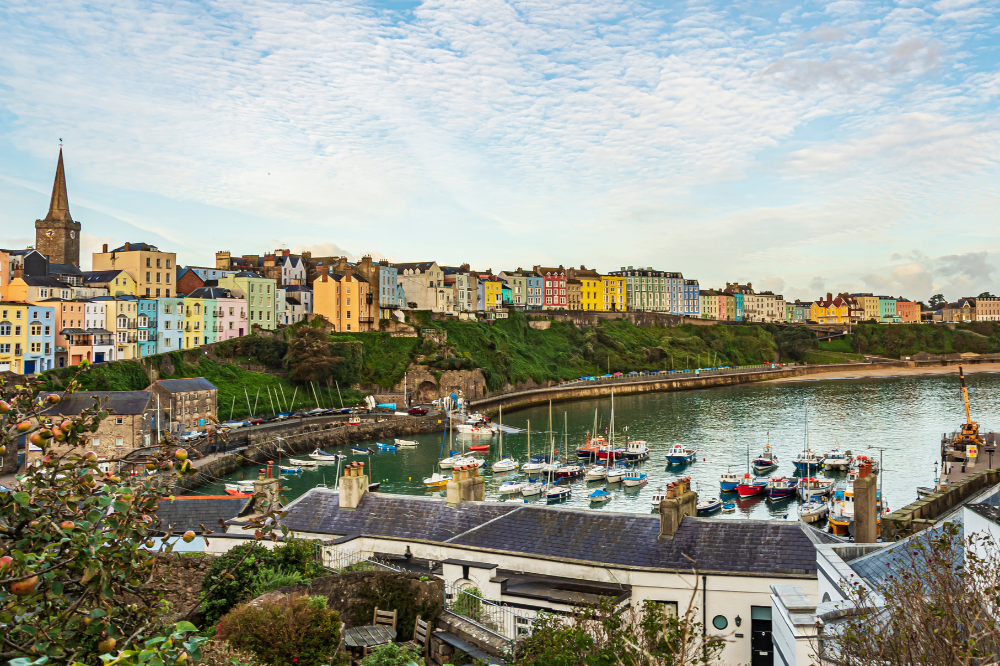
Wales has nine bands, A to I, based on property values on 1 April 2003. Wales revalued homes in 2005 using 2003 values and added band I for the highest value properties. You can check the band for any Welsh address on GOV.UK, and the Valuation Office Agency handles band reviews.
Welsh councils can charge premiums on long-term empty homes and second homes, so this matters if you will own a property in Wales that stays empty while you sell. Discounts and exemptions, including the single person discount, work in a similar way to England. The Welsh Government publishes guidance on bands and council tax support on gov.wales.
Northern Ireland
Northern Ireland does not have council tax. Instead, homeowners and occupiers pay domestic rates, which are based on the capital value of the property. This is an assessment of what your home might have sold for on the open market on 1 January 2005. Values above £400,000 are capped for rating purposes. However, there are plans for this to be updated hence check the government resources for the latest update.
Your rates bill is worked out by multiplying the capital value by the total rate poundage. That poundage is made up of two parts:
- A regional rate, set by the Northern Ireland Executive
- A district rate, set by your local council
Rates are billed and collected by Land & Property Services (LPS), part of the Department of Finance, so you deal with LPS rather than your council. When you move, tell LPS the date you leave your old home and the date you take on your new one. You can do this online through nidirect, which lets you create or update your rate account and change your billing address. LPS will then close your old account, send a final bill or refund and set up the account for your new home.
If you rent in Northern Ireland, rates may be included in your rent, particularly for smaller or lower value properties, so check your tenancy agreement and confirm with LPS who is responsible.
Help with rates is also available through LPS:
- Lone Pensioner Allowance gives a 20% reduction for people aged 70 or over who live alone. It is not means tested, so it is worth applying for after your move.
- Rate Relief and Housing Benefit for rates can help people on a low income.
- Disabled Persons Allowance can reduce the bill for homes adapted for a disabled person.
Allowances are linked to your circumstances at a specific address, so apply again or update LPS when you move.
Renters vs owners
Most tenants in England, Scotland and Wales pay council tax directly to the council, so you should register in your own name when your tenancy starts. There are exceptions. In a house in multiple occupation, or where bills are included in the rent, the landlord usually pays. Check your tenancy agreement so you know who is responsible. Homeowners are liable from the completion date.
Moving within the same council area
If you are moving within the same council area, you still need to tell the council (or LPS in Northern Ireland). Your account is tied to a property, so they will close the old account, open a new one and recalculate your instalments. Your band and charge may change, even if your council stays the same.
Exemptions
Some households do not pay council tax, or pay less. Examples include homes where everyone is a full-time student, people aged under 18, some carers and people who have moved into a care home. Contact your council to check if you qualify.
Frequently asked questions
- Do I pay council tax on two houses when I move?
You may do for a short period. You pay for the home you live in, and if you still own the old property while it is empty, your council may charge you for that too. Councils set their own rules on empty homes, so ask yours.
- When does council tax stop at my old house?
It normally stops on the day your sale completes or your tenancy ends. Moving out earlier does not end your liability on its own.
- Will I get a refund if I paid in advance?
If you have paid more than you owe up to your moving date, your council should refund the difference. Some do this automatically and others ask you to request it.
- Do I need to tell the council if I am moving in the same area?
Yes. Your account is linked to a specific property, so the council needs your moving date to close one account and open another.
- Does the single person discount move with me?
No. You need to apply again with your new council. Do this when you register so the discount applies from your first bill.
- Who pays council tax between tenants?
If a rented property is empty between tenancies, the landlord is usually responsible. Once you sign a tenancy and move in, the bill normally becomes yours.
- I am moving to Northern Ireland. Who do I pay?
You pay domestic rates to Land & Property Services instead of council tax to a council. Register with LPS through nidirect from the date you take on the property, and check whether any allowances apply to you.
Plan your move with Pickfords
Sorting council tax is one part of a smooth move. Our guide to moving home with a family covers the rest, and if your dates do not line up, our self storage starts from £18. Pickfords covers every postcode in the UK and Ireland, so wherever you are moving, request a free quote for your upcoming move.