How to plan your office removals
Office removals go smoothly when planning starts early. For most small and medium businesses, start three to six months ahead: confirm the date, appoint an office removal company, plan IT and communicate with staff, then move outside working hours so the business keeps running. Larger offices with server rooms or several floors may need longer.
This guide explains how to plan an office move step by step, from the first survey to the first Monday morning in your new workplace.
Your office removals timeline
| When | What to do |
|---|
| 6 months before | Confirm lease dates, set budget, appoint a project lead |
| 3 to 4 months before | Book a survey with an office removal company, plan the new layout, audit IT |
| 2 months before | Order new connectivity, plan storage, start clearing and archiving |
| 1 month before | Confirm move schedule, issue crates and labels, brief staff |
| Moving week | Back up data, pack desks, move out of hours |
| After the move | Test IT, update addresses, collect crates, review |
Planning an office move: the first steps
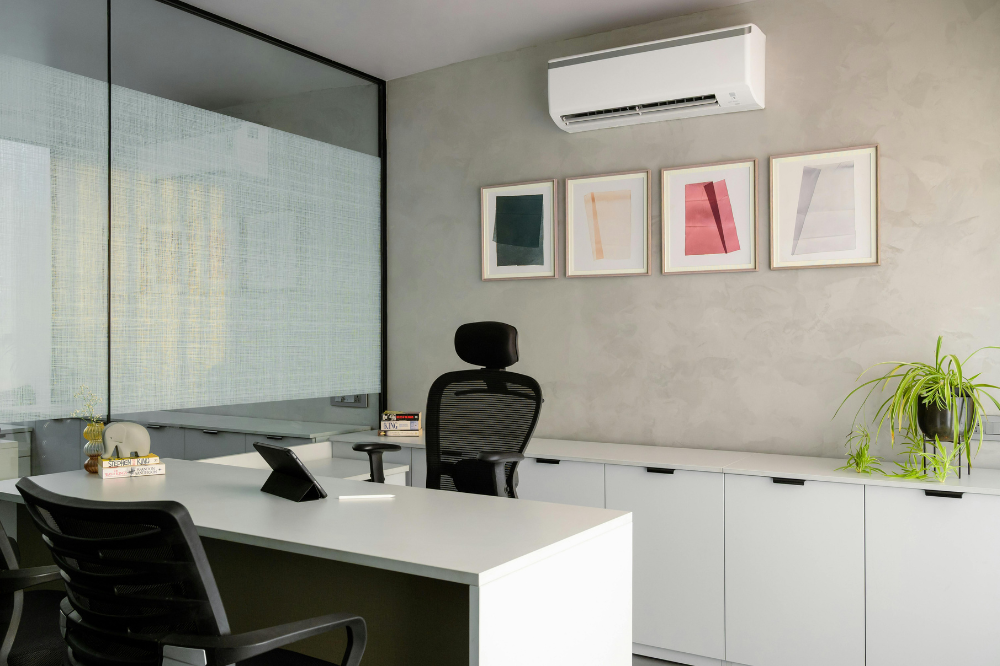
Appoint a project lead
Every office move needs one person responsible for decisions, budget and communication. In a small business this may be an office manager; in a larger business a dedicated project manager with moving experience can coordinate suppliers, landlords and staff. Having one point of contact keeps your office removal company, IT team and facilities managers working to the same plan.
Check your lease and dilapidations
Review the notice period and any obligations to return your current premises to their original condition. Dilapidations work (removing partitions, repairing walls, cleaning carpets) can take weeks, so build it into your timeline.
Plan the new layout
Measure the new space and draw a floor plan showing desks, meeting rooms, storage and network points. Give every desk a number. Your removal team uses this plan to place crates and furniture in the right spot first time.
Choosing an office removal company
Office removal companies vary in the size and type of moves they handle. When you speak to them, ask:
- Will a surveyor visit both premises to check access, lifts and parking?
- Can you move us in the evening or over a weekend?
- Do you provide crates, labels and trolleys?
- Can you disconnect, move and reconnect IT equipment, or work with our IT provider?
- What insurance cover is included?
- Do you offer business storage and secure disposal?
A clear written quote should list the number of staff and vehicles, the timings, the materials supplied and any extras. Whether you call them office removalists or a business moving team, look for experience with businesses of your size and sector.
Moving your IT
IT is the part of an office move with the greatest effect on downtime, so plan it early.
- Audit all equipment: computers, monitors, phones, printers, servers and network hardware.
- Back up all critical data before moving day and test that the backup can be restored.
- Order broadband and phone lines for the new office as early as possible, as business connections can take weeks to install.
- Set up and test the network at the new office before staff arrive.
- Label every cable and device with the desk number it belongs to.
- Use anti static bags and padded crates for sensitive equipment.
If you have a server room, consider a specialist IT move or moving servers in a separate, earlier phase.
Packing with crates
Plastic removal crates are faster and more secure than cardboard boxes for office removals. They stack neatly, close with a lid and can be sealed with tags.
- Give each employee a set number of crates for their desk contents.
- Label each crate with the person's name, department and new desk number.
- Ask staff to pack personal items separately and take valuables home.
- Pack shared areas (kitchen, stationery, reception) in clearly marked crates by room.
You can also buy packing materials for archive boxes, tape and protective wrapping.
Minimising downtime with out of hours moves
Moving in the evening, overnight or at the weekend means your team can finish work on Friday and start again on Monday at the new office. For larger businesses, a phased move works well: one department moves at a time, so the rest of the business keeps working. Remote working or temporary co-working space can cover any gap.
Check with both buildings about access hours, loading bays, lift bookings and any parking suspensions needed from the local council. In central London, for example, loading restrictions and building management rules often decide the moving window.
Business storage during an office move
An office move is a good time to free up space. Business storage can hold surplus furniture, equipment, stock or promotional material while you decide what to keep, or bridge a gap between leases. Pickfords business storage covers short and long term needs across the UK. Choose a secure facility to keep your belongings safe at all times.
Document storage
Many businesses keep years of paper records they rarely need. Archive them before the move so you are only moving active files. Under the Data Protection Act 2018 and UK GDPR, records containing personal data must be stored securely and disposed of safely when no longer needed; the ICO publishes guidance for businesses. Pickfords business storage can hold documents and files you need to keep.
Clearing, recycling and environmental clearance
Use the move to clear out what you no longer need.
- Sort furniture, paper and electronics for reuse, donation, resale or recycling.
- Dispose of old electrical equipment through an approved route under the WEEE regulations, and wipe data from devices first.
- Shred confidential papers securely.
- Remove any hazardous materials properly and keep records of disposal.
Staff communication
People settle into a new office faster when they know what is happening.
- Announce the move early with the date, the reason and what it means for commutes.
- Share a simple timeline and update it as plans change.
- Give packing instructions and crate allocations at least two weeks before.
- Send a welcome pack for the new office: floor plan, desk numbers, Wi-Fi details, transport links, parking and local amenities.
- Name someone staff can ask questions.
Updating your business address
After the move, update your address with:
- Companies House, if your registered office is changing (GOV.UK explains how)
- HMRC for VAT, PAYE and Corporation Tax
- Your bank, insurers and business rates team at the new local council
- Clients, suppliers, your website, Google Business Profile and email signatures
Royal Mail also offers redirection for business post.
Frequently asked questions
- How far in advance should we plan an office move?
Small offices can move with around three months of planning, while larger offices often need six months or more. The biggest lead times are usually lease negotiations, fit out work and new broadband connections.
- How long does an office move take?
A small office can often be moved in one evening or weekend. Larger offices may move over several weekends in phases. Your office removal company will give a timeline after the survey.
- Can an office move happen at the weekend?
Yes. Many businesses move in the evening or over a weekend to avoid downtime. Check both buildings' access hours, lift bookings and loading bay rules in advance.
- Who moves the IT equipment in an office move?
Your removal team can pack and move IT hardware safely, but disconnection, reconnection and network setup are usually handled by your IT provider or a specialist. Agree responsibilities in writing before moving day.
- What should we do with old office furniture?
Sell, donate or recycle what you do not need, and store what you may use later. Business storage is useful if you are unsure what fits in the new space.
- Do we need to tell Companies House we have moved office?
Only if your registered office address is changing. GOV.UK explains how to update it, and you should also tell HMRC and your bank about your new trading address.
Planning an office move? Get in touch with our expert team for personalised advice and a free quote for your business move.