Moving house with a cat or dog in the UK
Moving house with a cat or dog takes some extra planning, but most pets settle well within a few weeks. Keep routines steady, give your pet a quiet space on moving day and take the first weeks in the new home slowly. UK charities including Cats Protection, the RSPCA and Blue Cross advise keeping cats indoors for at least two to four weeks after a move, and in most of the UK you are legally required to keep your pet's microchip details up to date.

Before the move
Start preparing a few weeks ahead:
- Book a vet check if your pet is older or has health conditions, and ask about travel sickness
- Bring carriers and crates out early so your pet gets used to them
- Pack gradually rather than all at once, so the change feels less sudden
- Keep your pet's food, bowls, bedding and medication together in one clearly labelled bag
- If you rent, get written permission for your pet at the new property before you sign
Our tips to prepare for your move cover the rest of your planning.
UK pet law when you move
Microchipping
- England: dogs must be microchipped by eight weeks old, and since 10 June 2024 cats must be microchipped by 20 weeks old. According to GOV.UK, if your pet is not chipped you can be given 21 days to do it, or face a fine of up to £500.
- Scotland and Wales: microchipping is compulsory for dogs.
- Northern Ireland: dogs must be microchipped and licensed through your local council.
Wherever you live, your database record does not update automatically. Contact your microchip database with your new address and phone number as soon as you move. Add this to your list of who to inform when moving house.
Collars and tags
In public places, dogs must wear a collar and tag showing the owner's name and address. This applies across Great Britain even if your dog is microchipped, so order a new tag before moving day.
Registering with a new vet
If you are moving to a new area, find a vet close to your new home and register before you move. Ask your current practice to transfer your pet's records, including vaccinations, flea and worming history and any medication. The Royal College of Veterinary Surgeons runs a Find a Vet tool that lists registered practices across the UK. Having a local vet in place means you are ready if your pet becomes unwell while settling in.
Renting with a pet
If you are moving into a rented home, check the pet rules before you agree to the tenancy.
- England: according to Shelter, from 1 May 2026 the Renters' Rights Act gives private tenants the right to ask for permission to keep a pet. You must ask in writing and describe the pet. Your landlord must not unreasonably refuse and should reply in writing, normally within 28 days. Landlords cannot charge extra pet fees beyond those allowed under the Tenant Fees Act 2019.
- Scotland, Wales and Northern Ireland: the Renters' Rights Act does not apply, so the terms of your tenancy agreement decide whether pets are allowed. Ask your letting agent early.
Keep any permission in writing and store it with your tenancy documents.
Moving house with a cat
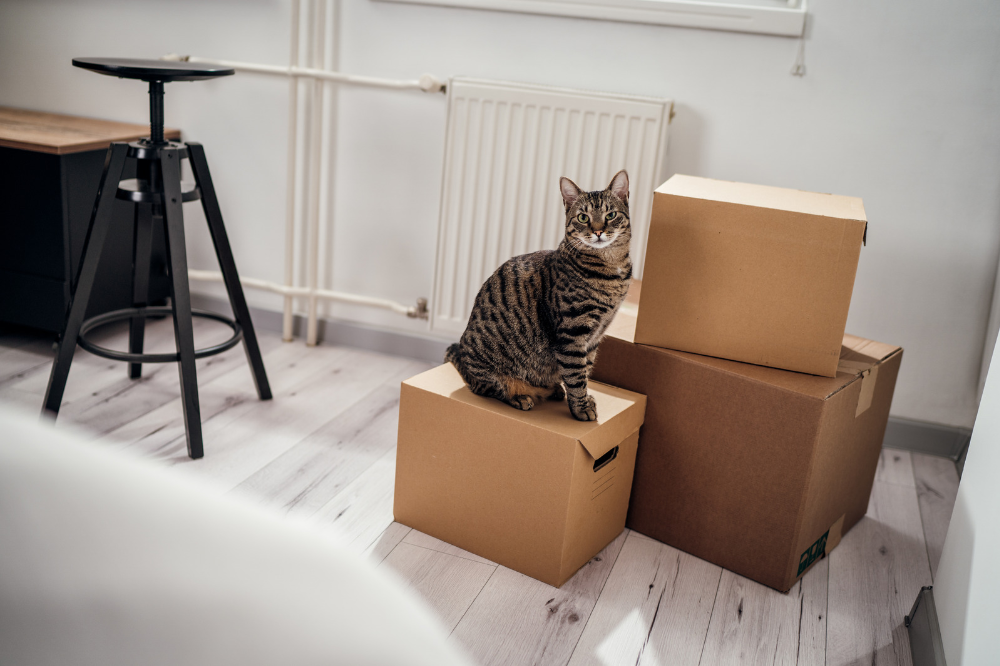
Keep your cat indoors
Cats are strongly attached to their territory. Cats Protection advises keeping your cat indoors for at least three weeks after moving, and the RSPCA and Blue Cross give similar guidance. This gives your cat time to see the new house as home and build up a familiar scent.
Start by settling your cat in one room with its bed, litter tray, food, water, a scratching post and somewhere to hide. Once it is eating normally and exploring calmly, open up the rest of the house a room at a time. Keep windows, doors and cat flaps closed during this period.
Letting your cat out for the first time
- Let your cat out shortly before a mealtime, so it is hungry and likely to return
- Go out with your cat and stay nearby
- Leave the door open so it can come back in quickly
- Keep the first visits short and build up gradually
If your cat tries to return to your old home
Outdoor cats sometimes go back to their previous territory, especially after a short move within the same town. Let the new occupants know, ask them not to feed your cat and give them your phone number. Some owners keep a cat indoors for longer in this situation.
Multi-cat homes
Settle cats in the same room only if they normally get on. Otherwise, give each cat its own room with separate food, water and litter trays. Provide more hiding places than usual.
Moving house with a dog
Dogs Trust and Blue Cross both advise keeping your dog's routine as normal as possible. Keep feeding, walking and bedtimes steady before, during and after the move.
In the new home, set up one quiet room with your dog's bed, water, toys and an unwashed item of your clothing. Let your dog explore the rest of the house on a lead at first. Walk the new neighbourhood on a lead for the first few days and check that garden fences and gates are secure before letting your dog off the lead outside.
Your moving day plan
Moving day is the most stressful part for most pets, with open doors, unfamiliar people and noise. Choose one of these options:
- Boarding or a pet sitter: book a cattery, kennels or a trusted friend for the day or a few days around the move. Check vaccination requirements in advance.
- A quiet room: empty one room first, place your pet inside with water, bedding and a litter tray or toys, close the door and put a sign on it. Tell the removal team which room your pet is in.
Move your pet last from the old home and settle it into its new room first. Our guide on how long moving house takes can help you plan the timings.
Moving to the UK from another country with a pet
If you are moving to England, Scotland or Wales with a dog, cat or ferret, GOV.UK sets out these rules:
- Microchip: your pet must be microchipped before its rabies vaccination.
- Rabies vaccination: you must wait at least 21 full days after the first vaccination (or the last dose of the first course) before travelling.
- Pet travel document: the document depends on where you are travelling from. An EU pet passport is accepted from the EU. Pets from listed countries such as Australia, the USA, Canada and New Zealand need a Great Britain pet health certificate, signed by an official vet, and must arrive within 10 days of it being issued. A GB animal health certificate can be used to return from the EU and some other countries within its validity period.
- Unlisted countries: your pet also needs a rabies blood test taken at least 30 days after vaccination, and you must wait three months from the sample date before travelling.
- Tapeworm treatment for dogs: a vet must treat your dog no less than 24 hours and no more than five days before arrival.
- Approved routes: you must travel on an approved route, unless you are travelling within the UK or from Ireland.
- If the rules are not met: your pet may be put into quarantine for up to four months or refused entry if you arrive by sea. You pay any fees or charges.
Some countries have extra conditions. For example, GOV.UK says cats from Australia also need a certificate confirming no exposure to Hendra virus. Check the full GOV.UK guidance well before you book.
Moving abroad from the UK with a pet
If you are moving overseas, the rules depend on your destination:
- EU countries and Northern Ireland: GOV.UK says your pet needs a microchip, a rabies vaccination at least 21 days before travel and an animal health certificate from your vet. The certificate must be used to enter the EU within 10 days of issue. If you live in England, Scotland or Wales, you cannot use a pet passport to enter the EU, even one issued in an EU country. Some countries also require tapeworm treatment for dogs.
- Non-EU countries: you will usually need an export health certificate, and some countries require blood tests, import permits or quarantine. Check the destination country's rules and the GOV.UK guidance early, as the process can take several months.
Pickfords helps with international pet moves through our pet shipping service, and our pet shipping FAQs answer common questions. We can plan your pet's travel alongside your household move, including removals to and from Australia and the USA.
Frequently asked questions
- How long should I keep my cat indoors after moving house?
UK cat charities recommend at least two to four weeks, and Cats Protection advises a minimum of three weeks. Your cat should be eating, using its litter tray and relaxed indoors before you let it out. Many owners let their cat out for the first time just before a meal.
- What is the best way to move house with more than one cat?
Settle cats in one room together only if they normally get on. Otherwise give each cat its own space with separate food, water and litter trays. Introduce them to the rest of the house gradually.
- Should I put my cat in a cattery on moving day?
A cattery removes your cat from the noise and open doors of moving day. If your cat finds catteries stressful, a closed quiet room with a sign on the door works well. Choose whichever suits your cat's temperament.
- How do I help a rescue dog settle after a house move?
Keep routines as close to normal as possible and give your dog a quiet room with familiar bedding. Build up new walks and time alone slowly. If anxiety continues, speak to your vet or a qualified behaviourist.
- Can my landlord refuse my pet?
In England, from 1 May 2026, landlords must not unreasonably refuse a written request to keep a pet and should reply in writing. In Scotland, Wales and Northern Ireland, your tenancy agreement sets the rules, so ask before you sign.
- Do I need to update my pet's microchip when I move?
Yes. Keeping your contact details up to date on a microchip database is a legal requirement for microchipped dogs across Great Britain and for cats in England. Contact your database as soon as you have your new address.
- Can I bring my dog to the UK from abroad?
Yes, if you meet the GOV.UK rules on microchipping, rabies vaccination, the right pet travel document and tapeworm treatment for dogs. Pets from unlisted countries also need a blood test and a three-month wait. Our pet shipping service can help you plan the move.
Moving with pets is easier when the rest of your move is in safe hands. Request a free quote for your upcoming move and our expert team will help you plan a calm moving day for the whole household, at home or overseas.