Accommodation guide for international students in the UK
Studying in the UK is an exciting step, and finding the right place to live is one of the first things to sort out. The short answer: most international students start in university halls or purpose-built student accommodation for their first year, then move into a private house share with friends. Book early, check every contract carefully and only pay deposits through trusted channels.
The UK is one of the most popular study destinations in the world. According to HESA, over 700,000 international students were studying at UK higher education providers in the 2023/24 academic year. This guide covers what you need to know before you arrive, how to find accommodation and what to expect in the UK's biggest student cities.

Student visa basics
Most international students need a Student visa to study a course in the UK. You can apply once your university has given you a Confirmation of Acceptance for Studies (CAS). You will also need to show you can pay your course fees and living costs and that you meet the English language requirement.
Rules and fees change, so always check the latest guidance on the official GOV.UK Student visa page. Your university's international student team is also a reliable source of help.
Arriving and your first weeks
The Home Office has replaced physical biometric residence permits (BRPs) with eVisas. An eVisa is an online record of your immigration status, which you access through a UK Visas and Immigration (UKVI) account. You use it to prove your right to study, rent and work in the UK, usually by generating a share code online.
In your first weeks, you will typically:
- Set up your UKVI account and check your eVisa details are correct
- Complete university registration and any police registration if required
- Register with a local GP
- Open a UK bank account
- Get a UK mobile SIM
- Learn local transport options and any student travel discounts
Finding student accommodation
1. University halls
University halls are owned or managed by your university. They are often the easiest option for first year international students, as many universities guarantee a room for new students who apply by a set deadline. Bills are usually included, and you will live with other students from day one.
2. Purpose-built student accommodation
Purpose-built student accommodation (PBSA) is run by private providers. It ranges from shared flats to studios with a private kitchen. Rooms are often near campus, with bills and Wi-Fi included. Many providers accept full payment upfront instead of a guarantor.
3. Private house shares
From the second year, many students rent a house with friends through a letting agent or landlord. This can work out cheaper, but you will usually be responsible for bills, council tax arrangements and your share of the rent.
4. Guarantors and UK guarantor services
Many private landlords ask for a UK-based guarantor: someone who agrees to pay your rent if you cannot. Most international students do not have one. Options include paying several months' rent in advance, using a university guarantor scheme where one exists or using a commercial UK guarantor service, which charges a fee to act as your guarantor. Check your university's accommodation office first.
5. Deposits and Right to Rent checks
In England and Wales, if you rent on an assured shorthold tenancy, your landlord must protect your deposit in a government-approved tenancy deposit scheme. Scotland and Northern Ireland have their own schemes. Ask for the scheme details when you pay.
In England, landlords must also carry out a Right to Rent check before you move in. With an eVisa, you prove this by sharing a code from your UKVI account.
6. Avoiding rental scams
Rental scams often target international students before they arrive. Be cautious if:
- The rent is far below similar rooms nearby
- You are asked to pay a deposit before seeing the property or a contract
- The "landlord" says they are abroad and cannot show you the room
- You are asked to pay by bank transfer to a personal account or by money transfer services
Use your university's accommodation service, verified providers and letting agents registered with a redress scheme.
Major UK student cities
1. London
London has more universities than any other UK city, including UCL, King's College London, Imperial College London, LSE and Queen Mary University of London. Rents are the highest in the country, according to ONS private rent data. Students often live in areas such as Stratford, Mile End, Camden, Elephant and Castle and Wembley, where transport links are good.
2. Manchester

The University of Manchester and Manchester Metropolitan University make Manchester one of the largest student populations in Europe. Popular areas include Fallowfield, Withington, Rusholme and Victoria Park, all along the Oxford Road corridor.
3. Birmingham
Birmingham is home to the University of Birmingham, Aston University and Birmingham City University. Selly Oak and Harborne are well known for students at the University of Birmingham, while Aston and Birmingham City students often live near Digbeth and the Jewellery Quarter.
4. Edinburgh
The University of Edinburgh, Heriot-Watt University and Edinburgh Napier University attract students from around the world. Marchmont, Newington and Bruntsfield are popular, close to the main university buildings.
5. Glasgow
The University of Glasgow, the University of Strathclyde and Glasgow Caledonian University make Glasgow Scotland's largest student city. Many students live in the West End, Hillhead and Partick, as well as near Merchant City for Strathclyde.
6. Leeds
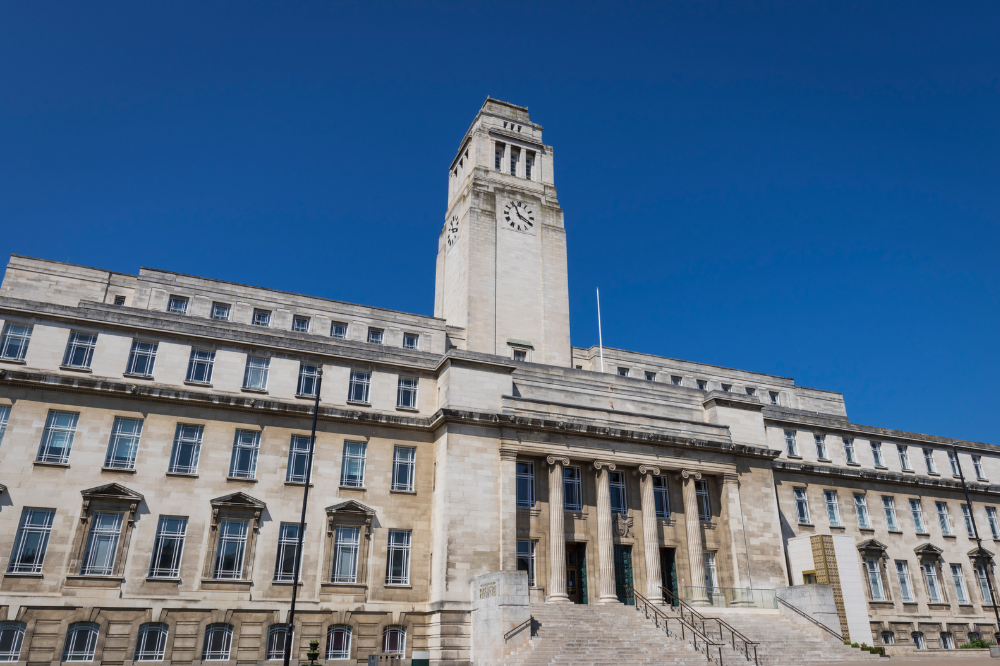
The University of Leeds, Leeds Beckett University and Leeds Trinity University draw large numbers of students. Headingley, Hyde Park and Woodhouse are the best known student areas.
7. Nottingham
Nottingham has the University of Nottingham and Nottingham Trent University. Students often live in Lenton, Dunkirk, Beeston and Arboretum.
8. Sheffield
The University of Sheffield and Sheffield Hallam University share a large student population. Popular areas include Crookes, Broomhill, Ecclesall Road and Crookesmoor.
9. Coventry
Coventry is home to Coventry University and the University of Warwick, which sits on the edge of the city. Warwick students often live in Canley, Earlsdon and Leamington Spa, while Coventry University students live close to the campus near Far Gosford Street.
10. Bristol
The University of Bristol and the University of the West of England (UWE Bristol) attract many international students. Clifton, Redland, Cotham and Stoke Park are popular, with Filton and Stoke Gifford near UWE.
Shipping your belongings to the UK

Most students arrive with a suitcase or two, but some need to bring more, especially postgraduates or those moving with family. Shipping a few boxes or furniture by sea is usually cheaper than excess baggage for larger volumes, though it takes longer. Pickfords handles international removals to and from the USA, Australia, Canada and New Zealand.
Student storage over the summer
Many halls and house contracts end in June or July, while the next academic year starts in September. If you are going home for the summer or have a gap between tenancies, storing your belongings in the UK saves you shipping them back and forth.
Our student self storage starts from £18, with 24/7 access at selected facilities. Container storage and traditional self storage suit short summer stays, while drive-up self storage is a long-term option. We offer free collection for drive-up storage and container storage in Horsham, Edinburgh and Manchester. Choose a secure facility to keep your belongings safe at all times. When your course ends, our guide on moving out of student accommodation can help you plan.
Council tax for full-time students
According to GOV.UK, full-time students do not pay council tax. If everyone in your home is a full-time student, the property is exempt. Halls of residence are also exempt. If you live with someone who is not a student, the household may still get a discount. Ask your university for a council tax exemption certificate and send it to your local council. Read more in our guide to council tax when moving home.
Opening a bank account

A UK bank account makes it easier to pay rent and bills. Most banks ask for your passport, proof of your immigration status (your eVisa share code) and proof of your UK address. Your university can usually provide a letter confirming your address and course. Some banks offer accounts designed for international students, and app-based banks can often be opened more quickly.
The NHS and the immigration health surcharge
As part of your Student visa application, you usually pay the immigration health surcharge. This gives you access to NHS healthcare on the same basis as UK residents, for the length of your visa. Check the current amount on GOV.UK before you apply. Once you arrive, register with a GP near your home or campus, as you will need one for most non-emergency care.
Frequently asked questions
- Can I rent a private house without a UK guarantor?
Yes, but it can take more planning. Options include paying rent in advance, using your university's guarantor scheme if it has one or using a UK guarantor service for a fee. Many purpose-built providers also accept upfront payment.
- Do international students pay council tax?
Full-time students do not pay council tax, and homes where everyone is a full-time student are exempt. You will need a certificate from your university to send to the council.
- Should I book halls before I get my visa?
Many students apply for halls once they have an offer, as rooms can go quickly. Check the cancellation terms in case your visa is delayed or refused.
- How do I prove my right to rent with an eVisa?
You generate a share code through your UKVI account and give it to your landlord or letting agent, along with your date of birth.
- Is it better to live in halls or private accommodation in first year?
Halls are usually the simpler choice in first year, with bills included and an easy way to meet people. Many students move to a private house share in second year.
- Where can I store my belongings over the summer?
You can use a self storage unit near your university. This avoids taking everything home and lets you pick it up when the new academic year starts.
- How do I avoid accommodation scams before arriving in the UK?
Book through your university, verified providers or registered letting agents. Never pay a deposit before seeing a contract and confirming the landlord or agent is real.
Starting your studies in the UK? Explore our student self storage options, or get in touch with our expert team for personalised advice.